The Two-Stage Handover Cycle for Off-Plan Buyers in Dubai
Off-plan buyers in Dubai inherit property-level risk at the moment of handover and the two-stage inspection cycle is the window where that risk shifts to the developer or stays with the buyer. This guide covers what the two-stage cycle involves, the defect categories a proper inspection catches, how each stage works, how timing determines whether rectification sits with the developer and how buyers avoid inheriting defects they never agreed to accept.
What the Two-Stage Handover Cycle Covers in Dubai
The two-stage handover cycle in Dubai refers to the pre-possession inspection process where the buyer identifies defects in a new or off-plan property, the developer rectifies the list and a re-inspection verifies the fixes before the buyer accepts handover. Stage 1 inspection produces the defect list. Stage 2 rectification and re-inspection closes it. For the broader context of ongoing property coverage that typically starts after handover, home annual maintenance contracts in Dubai show the service relationship that typically follows the handover cycle.
Defect Categories a Snagging Inspection Catches
Four defect categories make up most snag lists and each category needs different inspection methodology. For buyers evaluating what inspection depth they need, the property snagging service in Dubai covers the inspection scope that commercial-grade snagging engagements typically deliver.
- Finishing defects: Paint drips, uneven paint lines, grout gaps, missing silicone sealant, scratched glass, chipped tiles, misaligned skirting, inconsistent trim work.
- Functional defects: Doors that do not close flush, locks that stick, cabinet hinges that fail alignment, drawer runners that bind, appliances that fail cold-start tests, light switches that do not throw.
- MEP defects: Taps with low pressure or leaks, drains that pool, HVAC units that fail cooling-mode tests, thermostats that lose setpoint, electrical sockets with no earth, DB board inconsistencies.
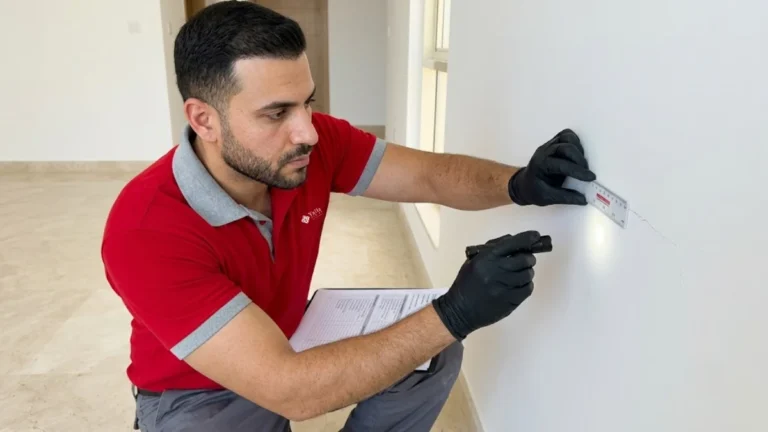
- Structural and envelope defects: Hairline cracks in walls or ceilings, floor-level deviations beyond tolerance, waterproofing failures around wet areas, balcony drainage pooling, window seal gaps.
The Two Stages of a Snagging Cycle
The cycle runs in two defined stages. Each stage has specific deliverables that must be documented so the buyer-developer handover is clean. For buyers approaching this stage structurally, the off-plan handover inspection in Dubai covers the methodology commercial inspectors use at each stage.
- Stage 1: Snagging inspection and defect list. Buyer or appointed inspector walks the property, documents defects by category with photos and location references, compiles the snag list and submits it to the developer against the handover timeline.
- Stage 2: De-snagging rectification and re-inspection. Developer executes rectification work on the listed defects, re-inspection verifies each item against the original snag list and any remaining items either get a second rectification cycle or move to a formal dispute protocol.
Why Snagging Timing Decides Who Pays for Defects
The handover document the buyer signs typically transfers defect responsibility to the owner once possession completes. Defects identified before possession sit with the developer under the sale agreement. Defects identified after possession become owner-cost repairs in most cases. The two-stage cycle must therefore complete before the buyer signs possession so the developer carries the rectification cost rather than the buyer absorbing it.
The Two-Stage Handover Cycle Explained
The two stages below cover the practical mechanics of a Dubai snagging engagement. Each stage has specific work scope and specific deliverables that determine whether the cycle protects the buyer or lets defects slip through.
Stage 1: Initial Snagging Inspection
What it is: The buyer or appointed inspector conducts a systematic walk-through of the property before possession, documenting every defect found against each room, zone or system against the sale specification.
What work is involved:
- Pre-inspection document review covering floor plans, specification sheets and finishing schedules
- Systematic room-by-room inspection against the specification
- Functional testing of doors, locks, drawers, taps, drains, sockets, switches
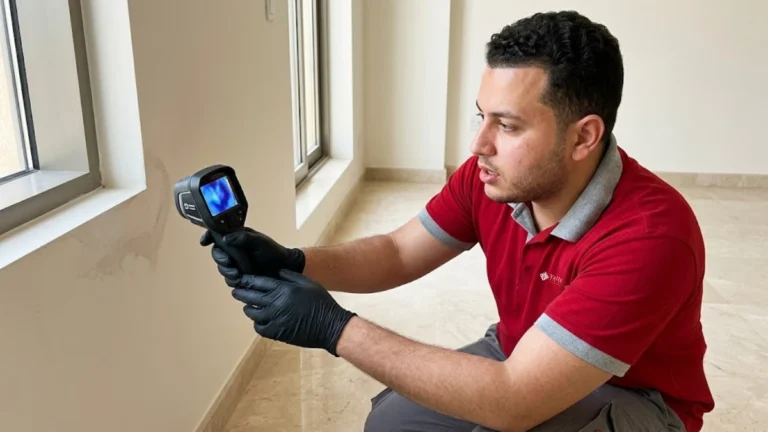
- MEP checks including HVAC performance, water pressure, drain flow and electrical continuity
- Finishing audit covering paint, tile, grout, silicone, trim and glass
- Structural checks covering wall cracks, floor level, waterproofing and envelope seals
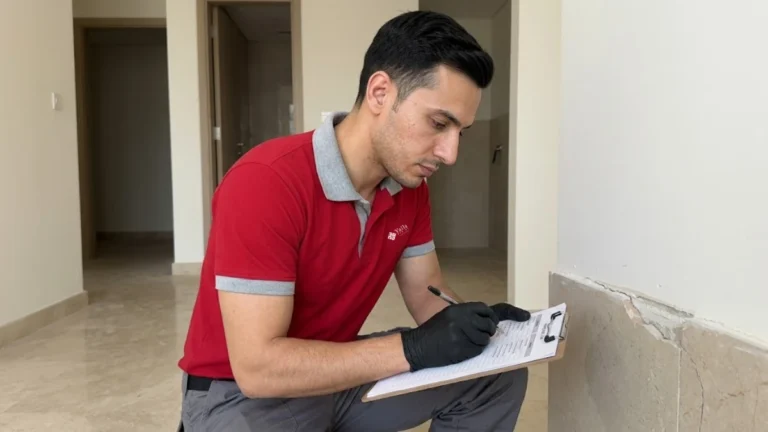
- Photo documentation of each defect with location reference
- Snag list compilation with defect category, severity and rectification note
- Formal submission to developer with timeline commitment
How Yalla Fix It delivers Stage 1 inspection: Every snagging engagement starts with review of the sale specification before the physical inspection so the inspector tests against what was contracted rather than against assumed standards. Inspectors cover all four defect categories using a standard inspection protocol with photo documentation per item. The snag list is delivered in a developer-ready format that specifies each defect with location reference, category, severity and expected rectification. For properties with specific functional systems such as premium HVAC installations or high-end finishings, specialist inspection scope is included rather than treated as out of scope.
Related reading: electrical services in Dubai cover the DEWA-certified diagnostic scope that supports electrical snag verification at Stage 1.
Stage 2: De-Snagging Rectification and Re-Inspection
What it is: The developer executes rectification work on each defect in the snag list and the inspector returns to verify each item against the original list before buyer sign-off.
What work is involved:
- Developer rectification execution against the submitted snag list
- Re-inspection against the original list item by item
- Photo documentation of rectified items with before and after reference
- Identification of items that failed re-inspection or were not addressed
- Second rectification cycle for failed items where developer agrees
- Formal dispute protocol initiation for items where developer disagrees
- Final re-inspection sign-off document confirming cycle completion
- Handover readiness confirmation to buyer before possession signing
What the trade-off looks like:
- Benefit: Documented re-inspection shifts defect cost to developer under the sale agreement
- Benefit: Formal sign-off removes dispute ambiguity after possession completes
- Cost: Re-inspection adds timeline that may conflict with possession deadline pressure
- Cost: Items the developer disputes require formal protocol which can delay handover further
- Cost: Buyers who waive re-inspection to meet deadlines absorb unrectified defects as owner cost
How Yalla Fix It delivers Stage 2 re-inspection: The team returns to site with the original snag list and photo documentation, verifies each item in the same sequence as the Stage 1 inspection and produces a sign-off document that records rectified items, failed items and disputed items. For disputed items, the team documents the specification reference and defect evidence so the buyer can engage the developer formally with written grounds. If the developer refuses rectification on items with clear specification grounds, the team continues to support the buyer through formal escalation.
Related reading: plumbing services in Dubai cover the water system verification scope that supports MEP defect re-inspection at Stage 2.

Decision Framework: Which Snagging Approach Fits Which Property
The approach between full inspection, specialist zone inspection and buyer self-inspection depends primarily on property size, specification complexity and buyer technical capacity. The property-size tiers below show how snagging scope scales and how Yalla Fix It delivers at each tier.
Apartments Under 1,500 Square Feet
Smaller apartments typically fit a single-visit Stage 1 inspection with a half-day Stage 2 re-inspection after developer rectification. Yalla Fix It handles these as standard snagging engagements with a single inspector, documented snag list and formal re-inspection within the handover window. Timeline from Stage 1 submission to Stage 2 sign-off typically runs 2 to 4 weeks depending on developer rectification queue.
Villas, Townhouses and Larger Apartments (1,500 to 4,000 sqft)
Mid-size properties between 1,500 and 4,000 square feet typically need extended Stage 1 inspection across multiple visits to cover specification depth. Yalla Fix It handles these with scaled inspection teams, zone-based snag list organisation and separate re-inspection scheduling for internal and external zones. For villa buyers approaching their first handover, the villa annual maintenance contract in Dubai covers the service relationship that typically starts immediately after snagging sign-off.
Large Villas and Commercial Handovers (4,000+ sqft)
Large villas above 4,000 square feet and commercial handovers typically need specialist inspectors for different zones. MEP specialists cover mechanical scope, finishing specialists cover interior quality and structural inspectors cover envelope and foundation checks. Yalla Fix It operates either as the lead snagging contractor coordinating specialist zone inspectors or as a specialist contractor within a larger inspection engagement led by the buyer’s project consultant.
Responsibility Allocation Reduces Three Specific Risks
Three risks drive how snagging responsibility should be structured. Addressing each one before Stage 1 begins prevents the disputes that otherwise appear only after possession.
Risk 1: Defects missed at Stage 1 inspection become owner cost. Any defect not documented in the snag list typically falls outside developer rectification scope. Inspection methodology that catches all four defect categories at Stage 1 is therefore the only mechanism that transfers the right defects to developer cost. The snag list in Dubai guide covers the systematic approach that minimises missed defects at Stage 1.
Risk 2: Developer disputes over what qualifies as a snag. When the snag list reaches the developer, items without clear specification reference or defect severity can be rejected as subjective quality concerns. Documentation that references the sale specification, the finishing schedule or the handover standard removes this ambiguity. AC repair and maintenance services in Dubai cover the diagnostic documentation that supports MEP defect disputes with technical evidence.
Risk 3: Timeline slippage between Stage 1 and Stage 2 pushes handover past buyer deadlines. Developers under pressure to close handovers can pressure buyers to accept possession before Stage 2 completes. Timeline commitments documented in writing at Stage 1 submission prevent this pressure converting into waived re-inspection. Handyman services in Dubai cover the minor rectification scope that buyers sometimes absorb independently when de-snagging timeline exceeds their deadline tolerance.
Handover Timeline Coordination: Two Rules Reduce Risk
Snagging timing against handover schedule determines whether defects move to the developer or stay with the buyer. Two rules at Stage 1 commitment reduce the risk that otherwise pushes defects onto owner cost.
Rule 1: Schedule Stage 1 inspection before possession signoff documents are released. Possession signoff typically transfers defect responsibility to the owner. Stage 1 inspection must complete before signoff so the snag list carries developer-side weight. For the broader context of what should happen after signoff, annual maintenance contracts in Dubai cover the ongoing service relationship that typically starts at this point.
Rule 2: Commit de-snag timeline contractually at Stage 1 submission. Submission of the snag list without a de-snag timeline commitment leaves the buyer dependent on developer scheduling discretion. Written timeline commitments at Stage 1 submission convert rectification into a scheduled milestone rather than open-ended developer capacity. Painting services in Dubai cover the finishing rectification scope that buyers sometimes schedule independently when developer rectification timeline exceeds their move-in window.
Choosing a Snagging Provider in Dubai
Cost for property snagging varies based on measurable factors rather than flat pricing:
- Property size and specification complexity proportional to inspection labour and documentation time
- Specialist scope inclusion MEP, structural and finishing specialists versus generalist inspection
- Re-inspection scope basic sign-off versus detailed before-and-after documentation
- Dispute support written grounds for disputed items versus pure defect listing
- Timeline flexibility standard inspection window versus accelerated handover deadlines
- Post-handover service inclusion scope of ongoing coverage included with snagging engagement
Verify the provider has specific experience with the property type (apartment, villa, commercial) and the developer involved. Confirm the provider uses standardised inspection protocols with photo documentation rather than ad-hoc walk-throughs. Ask about re-inspection methodology and how disputed items are supported. Request references from recent handovers in the same developer community or building.
Common Snagging Mistakes Off-Plan Buyers Make
Buyers unfamiliar with the Dubai snagging cycle commonly encounter patterns of mistakes that convert developer-cost defects into owner-cost repairs.
- Skipping Stage 1 inspection entirely under developer pressure to close handover quickly
- Running Stage 1 inspection without specification document review, which misses defects against contracted standards
- Signing possession before Stage 2 re-inspection completes, which absorbs unrectified defects as owner cost
- Accepting verbal developer commitments on rectification instead of written timeline documentation
- Treating finishing defects as unimportant when they often reveal structural or waterproofing issues underneath
- Running snagging without photo documentation, which weakens dispute grounds when developer rejects list items
- Skipping MEP functional testing, which pushes HVAC, plumbing and electrical defects onto owner cost
- Combining Stage 1 inspection with buyer-side renovations in ways that confuse developer-cost scope
How Yalla Fix It Handles Property Snagging in Dubai
Effective snagging requires methodology that addresses defect categories, two-stage cycle execution and dispute support alongside the physical inspection.
Pre-Inspection Specification Review
Every engagement starts with review of the sale agreement, specification sheets and finishing schedule so the inspector tests against contracted standards rather than assumed standards. The review produces an inspection protocol tailored to the property rather than a generic checklist.
Four-Category Inspection Methodology
Inspection covers all four defect categories (finishing, functional, MEP, structural) using a standard protocol with photo documentation per item. The protocol ensures no category is skipped under time pressure.
Developer-Ready Snag List Format
The snag list is produced in a format developers can act on directly, with each defect specifying location reference, category, severity and expected rectification. Format consistency reduces developer-side rejection on documentation grounds.
Stage 2 Re-Inspection and Sign-Off
Re-inspection follows the original Stage 1 sequence item by item, with photo documentation of rectified items and formal recording of failed or disputed items. Sign-off document gives the buyer clear grounds for possession or formal dispute initiation.
Dispute Support
For items the developer disputes, the team documents specification reference and defect evidence so the buyer can engage the developer with written grounds. Support continues through formal escalation where needed.
Coverage Integration
For buyers wanting integrated coverage from snagging through to ongoing property maintenance, scheduled service after handover prevents the gap where small issues escalate into larger repairs during the first year of occupancy.
Why Yalla Fix It for Snagging in Dubai
Yalla Fix It has delivered property snagging across Dubai off-plan handovers with pre-inspection specification review, four-category inspection methodology, developer-ready snag lists and Stage 2 re-inspection sign-off. The team covers 10,000+ maintenance and repair jobs completed across Dubai properties and the technician bench is 75+ certified technicians. Every snagging engagement produces documented inspection records and sign-off suitable for buyer archives and developer correspondence.
Coverage spans off-plan handovers across Downtown, Business Bay, Dubai Marina, Palm Jumeirah, Dubai Hills, Arabian Ranches, JBR and other Dubai residential communities.
Book Property Snagging With Yalla Fix It
For off-plan buyers approaching handover, contact Yalla Fix It for a property snagging engagement in Dubai and the workflow will be structured around specification review, Stage 1 inspection, Stage 2 re-inspection and formal sign-off before possession.
Frequently Asked Questions
What does the two-stage handover inspection cycle cover in Dubai?
Stage 1 is the pre-handover inspection where the buyer identifies defects in a new or off-plan property. Stage 2 is the developer rectification process followed by re-inspection. The two stages together form the handover inspection cycle that must complete before buyer possession signoff.
When should Stage 1 snagging inspection happen in a Dubai off-plan handover?
Stage 1 should happen after construction completion but before possession signoff documents are released. The snag list carries developer-side weight only when documented before possession transfers defect responsibility to the owner.
How long does the typical two-stage snagging cycle take in Dubai?
Timeline from Stage 1 submission to Stage 2 sign-off typically runs 2 to 4 weeks for smaller apartments and 4 to 8 weeks for villas or larger properties, depending on developer rectification queue and defect volume.
What happens if the developer disputes items on the snag list?
Items the developer disputes require formal protocol with written grounds. Inspectors who document specification reference and defect evidence at Stage 1 give the buyer stronger dispute support than ad-hoc defect lists.
What defects should a Dubai snagging inspection cover?
Four defect categories should be covered: finishing (paint, tile, grout, trim), functional (doors, locks, cabinets, appliances), MEP (plumbing, HVAC, electrical) and structural (cracks, waterproofing, floor level, envelope seals).
Can buyers do their own snagging inspection in Dubai?
Buyers can conduct self-inspection but typically miss MEP, structural and specification-based defects without specialist tools and reference documents. Professional inspection methodology catches defects that owner-cost repairs would otherwise absorb.
Does Yalla Fix It handle snagging across Dubai developments?
Yes. Snagging coverage spans off-plan handovers across Dubai with pre-inspection specification review, four-category inspection methodology, developer-ready snag lists, Stage 2 re-inspection and dispute support.