How to Remove Mold From a Bathroom Ceiling and Keep It From Returning
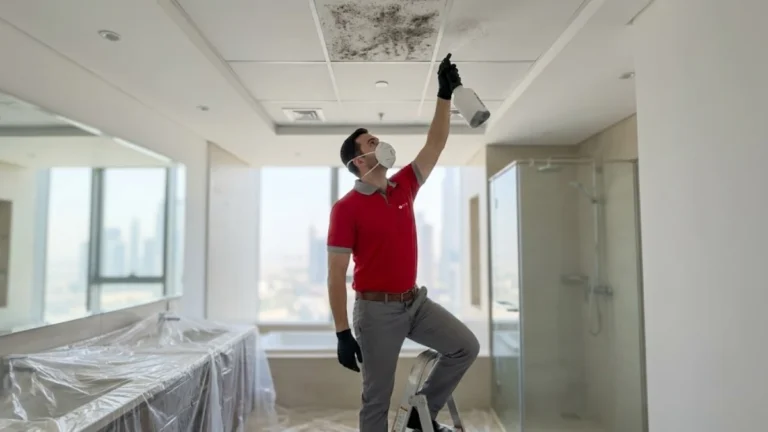
The safest way to remove mold from a bathroom ceiling is to identify and fix the moisture source first, then clean or professionally remove the affected materials depending on the extent of the growth. Small areas of surface mold may be cleaned safely, but widespread, recurring, or black mold often requires professional mold remediation to prevent spores from spreading and to stop the mold from returning.
The dark spots above the shower. The patch that keeps coming back a month after you cleaned it. The corner of the ceiling that feels slightly soft when you touch it. Bathroom ceiling mold is one of the most common indoor complaints across Dubai apartments and villas, and it’s also the one people underestimate most. Knowing how to remove mold from a bathroom ceiling the right way starts with knowing that the mold you can see is almost never the full extent of the problem.
This guide walks through why bathroom ceilings are the highest-risk mold zone in Dubai homes, why surface cleaning consistently fails, what proper professional removal actually involves, and what it takes to make sure it doesn’t come back. If you already know you need help, mold removal services in Dubai that specialise in bathroom remediation are the safest route.
Why Bathroom Ceilings Are Ground Zero for Mold in Dubai
Every bathroom in Dubai is a small, sealed, high-humidity room with poor natural ventilation. That combination alone puts the ceiling at higher risk than any other surface in the home. Add these conditions and it becomes almost inevitable:
- Steam rises: hot water from showers produces steam that hits the coldest surface in the room, which is almost always the ceiling
- Ceilings are the last surface to dry: warm, humid air lingers at ceiling level for hours after a shower, especially if the extractor fan isn’t running long enough
- AC vents create condensation: many Dubai bathroom ceilings have AC vents that cool nearby surfaces, creating condensation points around them
- Concealed pipes run through ceiling voids: shower waste pipes, water supply lines, and drainage from the apartment above all pass through ceiling cavities. Slow leaks in these pipes go undetected for weeks
- Gypsum board is the standard ceiling material: gypsum board is porous and absorbs moisture into the material itself, giving mold a food source and a hiding place
- Extractor fans are often inadequate: many Dubai apartments have underpowered bathroom extractor fans, or fans that vent into a ceiling void instead of outside the building
The result is that bathroom ceilings in Dubai homes are one of the most reliable places to find mold. And because the mold is above eye level, it’s often ignored until it has spread significantly.
Signs Bathroom Ceiling Mold Is Worse Than It Looks
What you see on the surface is rarely the full picture. Warning signs that the mold has spread into the ceiling structure itself:
- Discolouration extending beyond the visible patch: yellowish, brownish, or grey shadowing around the main mold spot
- A soft or spongy feel when you press lightly on the ceiling with a broom handle
- Bubbling, peeling, or sagging paint: moisture trapped inside the ceiling pushes paint away from the surface
- A persistent musty smell even when the bathroom is dry and unused
- The stain returns within weeks after cleaning
- Water stains in the same spot with a rust-coloured ring
- Nearby ceiling cracks or a slight sag: sign of structural water damage
Any of these means the mold has moved beyond a surface issue and requires professional assessment. Our full guide on hidden mold signs Dubai homeowners often miss covers additional indicators.
What Causes Bathroom Ceiling Mold: The Real Sources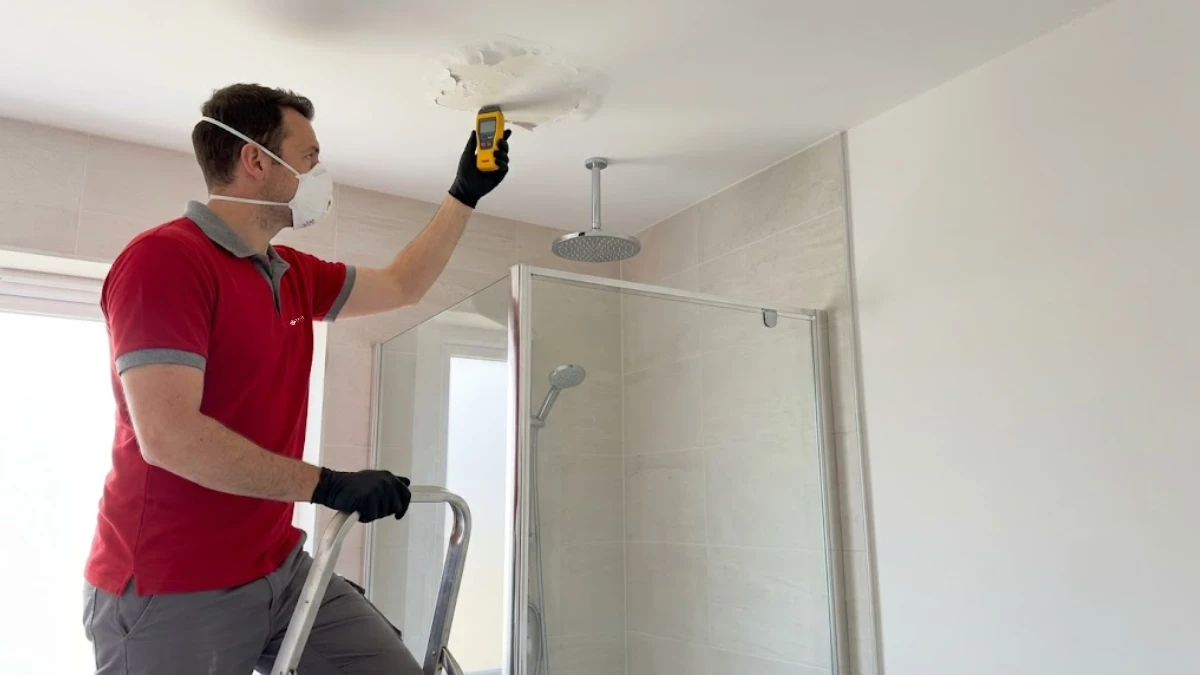
Cleaning surface mold without fixing the source is the single most common reason mold returns. In Dubai bathrooms, the mold is almost always caused by one of these:
- Slow leaks from the apartment above. This is the single most common cause of persistent bathroom ceiling mold in Dubai apartment buildings. Water from a neighbour’s shower, sink, or washing machine drips slowly through concealed plumbing joints, tracks down into your ceiling void, and saturates the gypsum board over weeks. You never see the water, but the mold appears in the same spot repeatedly. If your bathroom ceiling mold keeps returning in the same location, checking the plumbing above is the first step, and getting the leak fixed by professional plumbing services in Dubai needs to happen before any mold removal.
- AC condensation and drain pan overflow. If your bathroom or adjacent room has an AC unit with a blocked drain line or overflowing drain pan, water pools inside the ceiling near the unit and creates conditions for mold. This often shows up as mold near an AC vent or in the corner of the ceiling closest to an AC unit.
- Inadequate ventilation. If your bathroom extractor fan is undersized, broken, or vents into a ceiling void instead of outside, humidity from showers stays trapped at ceiling level. Over months, this is enough to establish mold even without any leak.
- Concealed shower pipe or waste pipe leaks. Slow drips from your own shower’s water supply or waste pipes can travel behind wall tiles into the ceiling below. This is common when mold appears on the ceiling of a room directly below a bathroom.
- Water tank overflow or damage. Villa owners with rooftop water tanks sometimes have slow overflow leaks that soak into the ceiling below. This is easy to overlook because the affected room may be several floors down.
Understanding which of these is behind your specific mold problem is the difference between fixing it and cleaning the same spot every three months. Knowing how to remove mold from a bathroom ceiling permanently starts with identifying the correct moisture source.
Why Surface Cleaning Fails on Bathroom Ceilings
Household cleaners can lighten the surface stain temporarily. What they can’t do is any of the following:
- Reach mold growing inside porous gypsum board
- Address moisture trapped inside the ceiling cavity
- Kill mold that has spread beyond the visible patch
- Fix the leak, condensation, or ventilation issue underneath
- Prevent spores from being spread further when the ceiling is disturbed
Painting over bathroom ceiling mold makes it worse. The paint traps moisture and mold spores against the gypsum board, accelerating growth beneath the surface. Within a few months, the paint bubbles or peels, and the mold that returns is more established than before.
Cleaning also disturbs spores. In a small, sealed bathroom with a running AC, those spores circulate quickly, spreading the problem to walls, grout, and surrounding rooms.
This is why proper removal is professional work.
How to Remove Mold From Bathroom Ceiling: The Professional Mold Remediation Process
Professional bathroom ceiling mold remediation follows a specific sequence. Skipping any stage is why the mold returns.
- Inspection and moisture mapping: locate every visible mold patch, plus hidden moisture inside the ceiling cavity using thermal imaging and moisture meters
- Source identification: pinpoint the actual cause, leak from above, AC drain issue, poor ventilation, or shower pipe leak
- Testing where required: species identification for suspected black mold, or air sampling for households with respiratory symptoms
- Containment: seal off the bathroom with plastic barriers so mold spores don’t spread through the rest of the home during the work
- Ventilation control: HEPA-filtered negative air machines run throughout to capture airborne spores
- Ceiling assessment: determine whether the affected gypsum board can be treated in place or needs to be cut out and replaced. Ceilings with soft, spongy, or extensively colonised areas are always replaced, not just cleaned
- Treatment: application of Dubai Municipality-compliant antimicrobial solutions to the ceiling and surrounding structure
- Drying: professional dehumidification of the ceiling void to eliminate residual moisture before any repair
- Repair and repainting: replacement gypsum board where needed, mold-resistant primer, and mold-resistant paint
- Root cause repair: the actual moisture source is fixed, leak repair from the unit above, AC drain servicing, extractor fan replacement, or ventilation upgrade
- Post-remediation verification: final inspection and, for severe cases, air sampling to confirm the space is safe
Without step 10, the mold comes back. Without step 6, the mold comes back faster. This full sequence is what proper mold remediation looks like, and it’s the reason professional work lasts where surface cleaning fails.
Mold Inspection and Mold Testing Before Removal
Before starting removal, a professional mold inspection uses moisture meters, thermal imaging, and physical assessment to identify hidden moisture and the actual cause. For anyone working out how to remove mold from a bathroom ceiling properly, this inspection step is what determines whether the removal actually lasts. For bathroom ceilings specifically, this often includes checking the plumbing in the apartment above, inspecting AC drainage, and testing extractor fan airflow. Where recurring mold, unexplained respiratory symptoms, or suspected black mold are involved, mold testing is added to the inspection to identify spore concentration and species. Our detailed article on professional mold inspection in Dubai covers what a full inspection and mold testing visit includes.
How to Remove Mold From Bathroom Ceilings: Residential Services in Dubai
Residential bathroom ceiling mold is one of the most common jobs in Dubai apartments and villas. Common patterns:
- Apartment residents: mold appearing in the same ceiling spot repeatedly, usually caused by a slow leak from the unit above
- Villa owners: mold near skylights, roof-adjacent bathroom ceilings, or bathrooms below rooftop water tanks
- Staff accommodation and shared bathrooms: high usage plus underpowered extractor fans creates persistent humidity problems
Yalla Fix It handles residential bathroom ceiling mold removal services in Dubai, covering villas, apartments, and staff accommodation. Every job starts with a full moisture inspection and includes AC and plumbing checks. All work is completed by DEWA-certified technicians.
How to Remove Mold From Bathroom Ceilings: Commercial Services in Dubai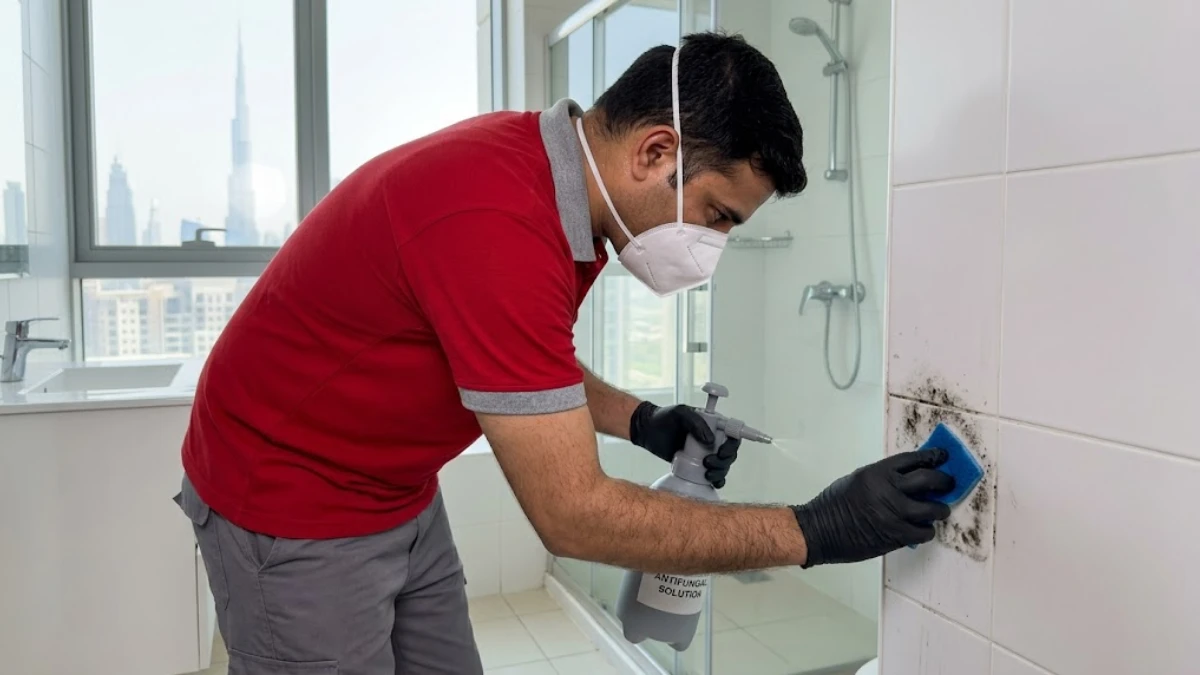
Commercial bathroom mold is a bigger problem than most owners realise. In hotels, restaurants, offices, and healthcare facilities, guest and staff bathrooms cycle through high humidity multiple times per hour. Common commercial cases:
- Hotels: guest bathroom ceilings with mold from fast turnover, high shower use, and inconsistent ventilation
- Restaurants: staff and customer bathrooms in high-humidity environments near kitchens and dishwashing
- Offices: bathrooms with insufficient extractor capacity for peak usage times
- Healthcare facilities: patient and staff bathrooms where mold has compliance and infection-control implications
- Retail: staff bathrooms in older buildings with degraded waterproofing
Yalla Fix It delivers commercial bathroom mold removal services in Dubai, covering offices, hotels, restaurants, retail spaces, and healthcare facilities. Work is scheduled around your operations to avoid disruption, and every job includes documented reporting suitable for compliance, insurance, and facility management records.
How to Keep Bathroom Ceiling Mold From Returning
Once the mold is properly removed and the moisture source is fixed, prevention is straightforward:
- Fix plumbing leaks fast: even a small leak from the unit above will restart mold within weeks. If you notice a leak after hours, Yalla Fix It’s 24/7 emergency plumbing services in Dubai can get someone on-site fast, before water spreads into ceiling cavities
- Run the extractor fan during and after every shower: minimum 20 minutes after each shower to clear humidity from ceiling level
- Upgrade an inadequate extractor fan: undersized or old fans can’t remove the volume of humid air from a Dubai shower. If yours is over 5 years old and mold keeps returning, it’s likely the cause
- Service your AC regularly: booking AC cleaning services in Dubai keeps drain pans, coils, and vents from becoming moisture sources
- Keep the bathroom door open after showers to let humidity dissipate faster
- Wipe ceiling condensation if you can see moisture forming during or after a shower
- Use mold-resistant paint when repainting bathroom ceilings, this alone reduces surface mold significantly
- Check for stains monthly: catching new mold in the first few weeks is far easier than removing established colonies
When to Call for Professional Bathroom Ceiling Mold Removal
If you’re trying to work out how to remove mold from a bathroom ceiling and any of these apply, professional service is the right call:
- The mold has returned in the same spot after previous cleaning
- The affected area is larger than roughly half a square metre
- The ceiling feels soft, spongy, or has visible sagging or cracking
- The mold is greenish-black, slimy, and looks like potential black mold
- Anyone in the home has ongoing respiratory symptoms
- You suspect a leak from the apartment above but can’t identify or reach it
- The bathroom is in a rental property where you can’t fully address the source yourself
Yalla Fix It’s technicians inspect the property, identify the actual moisture source, and treat the problem at the root. All work is carried out by DEWA-certified technicians.
Recurring Bathroom Ceiling Mold Isn’t a Cleaning Problem, It’s a Moisture Problem
Yalla Fix It has completed 10,000+ maintenance and repair jobs across Dubai with a 95% customer satisfaction rate, 75+ DEWA-certified technicians, and 24/7 emergency support with a 30-minute response commitment. Contact us today to book a professional mold inspection and stop bathroom ceiling mold from coming back for good.
Frequently Asked Questions
Why does mold keep coming back on my bathroom ceiling?
Because the surface cleaning removes the mold you can see but not the moisture source feeding it. In Dubai bathrooms, that source is almost always a slow leak from the apartment above, an AC drain issue, inadequate ventilation, or a concealed pipe leak. Until the source is fixed, mold typically regrows within weeks.
Is bathroom ceiling mold dangerous?
Regular bathroom mold can trigger allergic reactions, sinus irritation, and worsened asthma symptoms with repeated exposure. Black mold (Stachybotrys) carries more serious health risks including respiratory illness. Children, elderly household members, and anyone with respiratory conditions face higher risk.
Can I paint over the bathroom ceiling mold to seal it?
No. Painting traps moisture and spores against the gypsum board, accelerating growth beneath the paint. The mold typically returns within a few months and often causes the paint to bubble or peel.
What kills mold on a bathroom ceiling permanently?
Permanent removal requires fixing the moisture source, removing all colonised gypsum board rather than just cleaning the surface, treating the surrounding structure with antimicrobial solutions, thoroughly drying the ceiling cavity, and monitoring humidity going forward. This is why professional removal lasts and surface cleaning doesn’t.
How much does it cost to remove mold from a bathroom ceiling in Dubai?
Cost depends on the affected area size, whether the mold has spread into the ceiling cavity, whether gypsum board needs replacing, and whether a leak repair is required. Yalla Fix It provides a firm quote after a physical inspection.
How long does bathroom ceiling mold removal take?
A single bathroom with contained ceiling mold is usually completed within one day including inspection, containment, removal, treatment, drying, and repair. Larger cases involving leak repair from an upstairs unit or extensive ceiling replacement take longer.
What’s the best way to prevent bathroom mold from returning after removal?
The three highest-impact prevention steps: run the extractor fan for at least 20 minutes after every shower, upgrade the fan if it’s undersized or over 5 years old, and address any leak from an upstairs unit immediately. Together these fix the three most common causes.
Should I replace my bathroom ceiling if mold has been there for a long time?
If the gypsum board is soft, spongy, or has visible sagging, replacement is almost always required. Cleaning cannot restore a structurally compromised gypsum board, and painting over damaged material traps the mold rather than removing it. A professional inspection confirms whether replacement is needed as part of the mold remediation process.