Water Leakage Detection in Dubai Villas: Where Plumbers Look First and Why
Villa owners in Dubai often spot the symptom of a leak long before the source becomes visible and the gap between symptom and source is where water damage, mold growth and electrical risk compound. This guide covers what water leakage means in a villa context, the four detection methods professional plumbers use, where to look first by suspected zone and how to structure the response so damage stops at the leak rather than extending into the property fabric.
What Water Leakage Means in Dubai Villa Properties
Water leakage in Dubai villas refers to any unintended escape of water from supply lines, drainage lines, fittings or external irrigation systems into the property structure, cavity spaces or external areas. Leaks can be visible (dripping taps, wet floors, ceiling stains) or concealed (behind walls, under slabs, inside ductwork) and concealed leaks cause more cumulative damage because they go undetected for longer. For the broader context of plumbing coverage that typically catches leaks before they escalate, plumbing services in Dubai show the diagnostic scope that commercial-grade plumbing engagements deliver.
Types of Water Leaks Villa Owners Encounter
Four leak categories make up most Dubai villa cases and each category needs different detection methodology to locate the source. For leaks that need immediate response outside standard booking windows, emergency maintenance in Dubai covers the on-demand response scope that water escape events typically require.
- Pressurised supply line leaks: Water escaping from hot or cold supply lines, typically producing continuous pressure drop, water meter movement during inactive periods and audible flow in walls or floors.
- Drainage line leaks: Water escaping from waste and drainage lines, typically producing damp patches below bathrooms and kitchens, foul odours and localised wall or floor staining.
- Fitting and fixture leaks: Water escaping from taps, mixers, toilet connections and appliance supply lines, typically visible at the fixture itself but sometimes migrating along pipework before showing.
- External irrigation and tank leaks: Water escaping from garden irrigation systems, swimming pool plant or water tanks, typically showing as unexpected water bill spikes and localised subsurface water around external areas.

Why Leak Location Matters More Than Leak Volume
A small leak in the wrong location causes more damage than a large leak in the right location. Leaks against electrical risers create safety exposure. Leaks against external walls support hidden mold development because wall cavity moisture is slow to dry. Leaks under slab foundations degrade substrate integrity over years. Leaks into bedroom and living areas damage finishes directly. Early detection matters because concealed leaks compound damage weekly while visible leaks typically get fixed quickly. For leak cases where mold has already appeared from unresolved moisture, mold removal services in Dubai cover the parallel treatment scope that typically runs alongside the plumbing repair itself.
The 4 Leak Detection Methods Professional Plumbers Use
The four methods below cover the practical detection toolkit for Dubai villa leak diagnosis. Each method suits specific leak types and professional plumbers typically combine two or three methods on a single engagement.
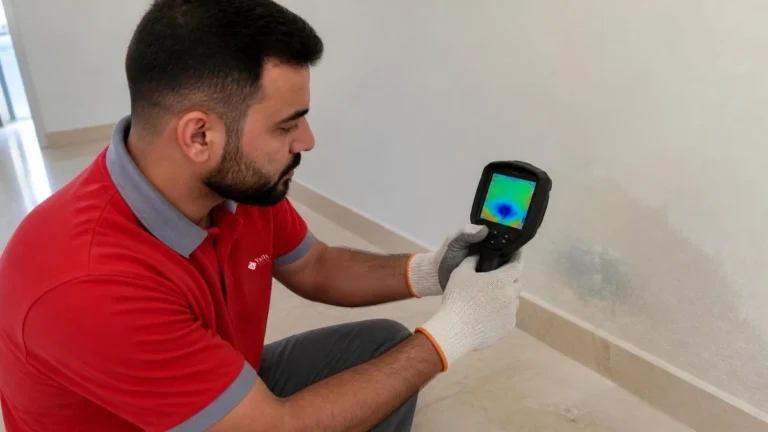
Thermal Imaging
What it is: Infrared thermal cameras detect surface temperature variance across walls, floors and ceilings. Water leaks typically produce cooler surface readings where moisture has migrated into substrate, visible on the thermal image as distinct cold or hot patches depending on supply type.
Best for: Concealed leaks behind plasterboard walls, under floor finishes, inside ceiling voids. Particularly effective for hot water supply leaks because the temperature differential against ambient is highest.
Limitations: Needs temperature differential to show results. Leaks that have fully equalised to ambient temperature or very recent small leaks may not produce visible thermal signature.
Related reading: electrical services in Dubai cover the DEWA-certified diagnostic scope that frequently overlaps with thermal imaging work when water escape risks electrical safety.
Moisture Meters
What it is: Handheld moisture meters measure the actual moisture content of wall, floor and ceiling substrates using pin-type or non-contact capacitance sensors. Readings confirm whether a surface actually has elevated moisture rather than appearing wet from other causes.
Best for: Confirming leak sources identified visually or by other methods. Mapping the extent of substrate moisture to size the repair scope. Testing suspect zones after thermal imaging flags them.
Limitations: Localised reading only. Does not identify the source pipe or fitting directly. Shows where moisture has reached but requires other methods to trace the origin.
Related reading: water tank cleaning services in Dubai cover the water system verification scope that pairs with moisture meter diagnostics when leak source traces back to tank or supply infrastructure.
Acoustic Detection
What it is: Specialist acoustic equipment amplifies the sound of water escaping from pressurised supply lines, letting the plumber trace the leak source by sound signature. Different leak types produce different acoustic signatures (hiss for small supply leaks, rush for large breaks, drumming for impact against concealed surfaces).
Best for: Pressurised supply line leaks concealed behind walls, under floors or inside slabs. Particularly effective for continuous leaks on live supply lines.
Limitations: Does not work on drainage line leaks because drainage is non-pressurised. Background noise can mask small leak signatures and best detection happens during quiet overnight hours.
Related reading: drainage cleaning services in Dubai cover the drainage line diagnostic scope that acoustic detection cannot address directly.
Pressure Testing
What it is: Pressure testing isolates sections of the supply system and holds them under test pressure to identify which section carries the leak. Standard protocol caps a zone off, pressurises it to a defined level and monitors pressure retention over a timed window.
Best for: Confirming which supply zone carries the leak when multiple potential sources exist. Verifying leak resolution after repair work. Testing new installation integrity before concealment.
Limitations: Takes time to isolate zones systematically. Requires access to shut-off valves across the property. Does not pinpoint the exact leak position within a zone, only confirms the zone contains a leak.
Advanced Methods for Complex Villa Cases
Two further methods come in when the four standard techniques cannot pinpoint the source, typically on external buried lines, long garden irrigation runs or complex subsurface routing.
- Electromagnetic pipe tracing: A transmitter induces a signal into a metal pipe. A receiver tracks the signal along the ground surface, mapping the pipe route and identifying anomalies that indicate the leak position. Works on metallic supply lines. Dedicated non-metallic pipeline detectors handle polyethylene and PVC lines using different signal methods.
- Ground penetrating radar (GPR): Radar pulses map subsurface anomalies including buried pipes and voids caused by water escape. GPR suits non-metallic buried lines where electromagnetic tracing does not apply and for large garden or driveway areas where excavation would be destructive without first narrowing the leak zone.
Pipe material affects method selection. Metal supply lines respond to acoustic detection, electromagnetic tracing and thermal imaging. Non-metallic lines (PEX, PPR, polyethylene) typically need thermal imaging, moisture meters and GPR because they do not conduct induced electromagnetic signals.
Decision Framework: Where Plumbers Look First by Suspected Leak Location
The detection approach depends on where the leak is suspected and the first inspection zones below cover the typical hierarchy villa plumbers follow.
Under-Slab and Foundation Leaks
Suspected slab leaks typically present as unexplained water bill spikes, warm or cold patches on floor surfaces (depending on supply type) and foundation moisture at external perimeter. Plumbers look first at slab penetrations where supply lines rise from foundation into wall cavities because these junctions carry the highest failure rate. Thermal imaging across floor surfaces identifies warm spots on hot supply leaks and acoustic detection traces pressurised flow sounds. For villa owners wanting integrated coverage across plumbing and major system risk, the villa annual maintenance contract in Dubai covers the preventive service relationship that catches slab leak risk factors early.
In-Wall Leaks (Behind Plasterboard or Masonry)
In-wall leaks typically present as damp patches on wall surfaces, paint discoloration, blistering plaster or mold development on wall faces. Plumbers look first at wet-area walls (bathroom and kitchen rear walls) because the highest concealed pipe density sits there. Moisture meters confirm elevated readings. Thermal imaging locates the active source. Acoustic detection confirms pressurised flow where the leak is on supply line rather than drainage.
Above-Ceiling and Roof Leaks
Above-ceiling leaks typically present as ceiling stains, dripping during specific usage patterns (shower above, upper floor sink above) or sudden ceiling damage after storm events. Plumbers look first at the floor directly above the ceiling stain and inspect any upper-floor wet areas, then work out to adjacent plumbing. For roof leaks, plumbers check external roof condition, parapet joints and waterproofing membrane integrity before investigating internal plumbing.
External Irrigation and Garden Leaks
External leaks typically present as unexpected water bill increases, localised wet patches in gardens, dropping tank levels or irrigation system pressure drop. Plumbers look first at irrigation line connections, pop-up sprinkler head seals and swimming pool plant where fitted. Buried external supply lines running under landscaping or driveways typically need electromagnetic pipe tracing for metallic lines or ground penetrating radar for non-metallic lines, both of which narrow the leak position before any excavation. For external repair work that falls outside specialist plumbing scope, handyman services in Dubai cover the general external repair work that typically accompanies irrigation leak resolution.
Responsibility Allocation Reduces Three Specific Risks
Three risks drive how leak detection responsibility should be structured. Addressing each one at the diagnosis stage prevents the damage escalation that otherwise appears as larger problems weeks or months later.
Risk 1: Fixing the symptom without finding the source produces repeat damage. Patching a visible wet patch without tracing the leak origin leaves the active leak running behind the fix. The water finds another path and the damage reappears nearby. Systematic detection that traces origin before repair prevents the pattern. Home annual maintenance contracts in Dubai cover the preventive service relationship that catches recurring moisture issues early.
Risk 2: Delayed response lets water damage escalate from cosmetic to structural. A small concealed leak that runs for weeks degrades plasterboard, swells wood fittings, damages electrical safety and supports mold growth. Response within 48 hours of symptom detection typically keeps damage cosmetic. Response delayed past two weeks typically means structural scope. Painting services in Dubai cover the finish restoration scope that typically follows leak repair where water damage has reached painted surfaces.
Risk 3: Timeline slippage between detection and repair extends damage window. Even after a leak is detected, delayed repair compounds damage week over week. Response capability during off-hours and weekends matters because leaks do not wait for business hours. Plumbing services in Dubai Marina cover the location-specific response capability that coastal villa and apartment properties typically need for water escape events.
Two Timing Rules That Protect Villa Owners
Two rules at the detection stage reduce the risk that otherwise lets small leaks become large damage.
Rule 1: Investigate within 48 hours of noticing any symptom. Unexplained wet patches, water bill spikes, musty odours, warped floor finish and ceiling stains are all symptoms that warrant investigation before they visibly worsen. Early investigation typically keeps diagnosis cost low and repair scope limited. Delayed investigation typically means substrate replacement rather than source repair. For leaks that trace to AC condensation and drip pan overflow (common in Dubai villas), AC cleaning services in Dubai cover the AC-side preventive scope that eliminates one of the most common leak sources.
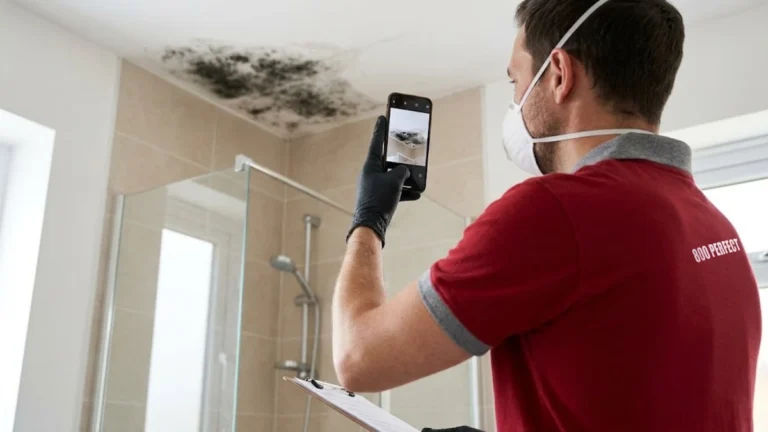
Rule 2: Document the leak source and extent with photo and moisture map before repair starts. Documentation protects owners against insurance disputes, supports claims against recent installation work and creates audit trail if the same leak returns. Undocumented repairs that fail later provide no evidence base for follow-up action.
Choosing a Water Leak Detection Provider in Dubai
Cost for villa leak detection varies based on measurable factors rather than flat pricing:
- Suspected leak location slab versus wall versus external changes detection equipment and labour hours
- Property size and layout complexity proportional to inspection coverage area
- Detection methods required single-method inspection versus multi-method combination
- Access difficulty concealed zones under furniture, built-in fittings or external paving complicate labour time
- Repair scope included detection-only engagement versus combined detection and repair
- Response urgency standard booking window versus accelerated emergency response
Verify the provider has specific villa leak detection experience with the equipment types involved. Confirm the provider uses multiple detection methods rather than relying on a single technique that may miss the source. Ask about repair scope and whether the provider can execute the fix after detection rather than passing it to another contractor. Request references from recent villa leak cases where the diagnosis correctly identified the source first time.
Common Water Leak Detection Mistakes Villa Owners Make
Owners unfamiliar with leak detection methodology commonly encounter patterns of mistakes that let small leaks become large damage.
- Delaying investigation of unexplained symptoms (water bills, damp patches, odours) in the hope they resolve on their own
- Patching visible wet spots without tracing the source, which lets the active leak find another path
- Choosing a single-method inspection when the leak type requires combination methodology
- Accepting repair scope without documented source identification, which prevents recourse if the leak returns
- Skipping thermal imaging on concealed leak cases because it costs more than visual inspection alone
- Attempting DIY leak detection on under-slab or in-wall cases where specialist equipment is required
- Running irrigation during active external leak investigation, which masks the water escape signature
- Ignoring AC drip pan overflow as a leak source because it appears to be a cooling system issue rather than plumbing
How Yalla Fix It Handles Water Leak Detection in Dubai Villas
Effective villa leak detection requires methodology that addresses symptom analysis, multi-method diagnosis and repair execution alongside the detection itself.
Pre-Inspection Symptom Review
Every engagement starts with symptom review covering water bill history, timing of symptoms, usage patterns that trigger symptoms and any related work recently completed on the property. Review feeds the detection method selection.
Multi-Method Detection Protocol
Detection combines thermal imaging, moisture meters, acoustic detection and pressure testing based on the suspected leak type. Electromagnetic pipe tracing and ground penetrating radar come in for buried external line cases where the standard four methods cannot narrow the source. Single-method diagnosis is used only when the leak type and source are clearly isolated by symptom analysis.
Source Identification Before Repair
Repair work starts only after the leak source is positively identified rather than assumed from visible wet spots. Source identification is documented with photo evidence and moisture map so repair scope is matched to the actual leak.
Combined Detection and Repair Capability
For cases where detection and repair can run together, the same team handles both scopes to avoid the delay between contractor handoffs. For cases requiring specialist repair scope outside standard plumbing (structural, waterproofing), the diagnosis is handed over with full documentation.
Insurance and Documentation Standard
Every engagement produces documentation suitable for insurance claims, disputes with developers or recent contractors and future reference if the leak location becomes relevant again.
Follow-Up Verification
Repair work is verified with pressure testing and moisture meter re-check 7 to 14 days after completion to confirm the leak is fully resolved rather than reduced to a slower rate.
Why Yalla Fix It for Water Leak Detection in Dubai Villas
Yalla Fix It has delivered water leak detection across Dubai villa and apartment properties with pre-inspection symptom review, multi-method detection protocol, source identification before repair and insurance-standard documentation. The team covers 10,000+ maintenance and repair jobs completed across Dubai properties and the technician bench is 75+ certified technicians. Every leak engagement produces documented diagnosis and repair records suitable for owner archives and insurance correspondence.
Coverage spans villa and apartment leak detection across Downtown, Business Bay, Dubai Marina, Palm Jumeirah, Dubai Hills, Arabian Ranches, JBR and other Dubai residential communities.
Book Water Leak Detection With Yalla Fix It
For villa owners noticing unexplained water symptoms or confirmed leaks, contact Yalla Fix It for a water leak detection engagement in Dubai and the workflow will be structured around symptom review, multi-method detection, source identification and documented repair.
Frequently Asked Questions
What are the main methods for detecting water leaks in Dubai villas?
Four core methods cover most villa cases: thermal imaging for temperature variance, moisture meters for substrate saturation, acoustic detection for pressurised line sounds and pressure testing to isolate failing supply zones. Two further methods come in for complex external cases: electromagnetic pipe tracing for buried metallic lines and ground penetrating radar for buried non-metallic lines. Professional engagements typically combine two or three methods.
Where do plumbers look first for leaks in Dubai villas?
Plumbers look first at slab penetrations where supply lines rise from foundation, wet-area walls behind bathrooms and kitchens, AC drip pans in service zones and external irrigation and tank connections. These zones account for most villa leak cases.
How quickly should a Dubai villa owner respond to a suspected leak?
Investigate within 48 hours of any symptom (unexplained wet patch, water bill spike, musty odour, warped flooring, ceiling stain). Response within this window typically keeps damage cosmetic. Delayed response past two weeks typically means structural repair scope.
Can thermal imaging find all types of water leaks?
Thermal imaging is highly effective for hot water supply leaks because of temperature differential against ambient. It is less effective for cold water leaks on cool surfaces or very recent small leaks that have not produced visible thermal signature yet. Combination with moisture meters and acoustic detection covers the gaps.
What is the difference between a supply line leak and a drainage line leak?
Supply line leaks come from pressurised hot and cold water lines, typically producing continuous water escape, pressure drop and audible flow sounds. Drainage line leaks come from non-pressurised waste lines, typically producing damp patches below wet areas, foul odours and localised staining. Detection methods differ between the two.
How much documentation should a leak detection engagement produce?
Documentation should include photo evidence of the leak source, moisture map of affected substrate, record of detection methods used, repair scope specification and post-repair verification results. Documentation supports insurance claims, claim disputes and future reference if the leak returns.
Does Yalla Fix It handle water leak detection across Dubai?
Yes. Water leak detection coverage spans Dubai villa and apartment properties with pre-inspection symptom review, multi-method detection protocol, source identification before repair, combined detection and repair capability and insurance-standard documentation across all residential communities.