DLP vs Warranty Period in Snagging in Dubai: Knowing the Difference Saves Money

Defect Liability Period and extended product warranty are two separate rectification regimes covering a Dubai property. The DLP runs 12 months from handover and is enforced contractually against the developer for construction and commissioning defects. The product warranty runs longer, typically 1 to 10 years and is enforced against equipment manufacturers and installers for specific equipment failures. Snagging dubai inspections that mix the two regimes lose rectification entries to the wrong escalation channel. Yalla Fix It separates the regimes at the entry-coding stage of every inspection.
The single most common mistake a buyer makes after handover is treating Defect Liability Period and product warranty as the same protection. They are not. They cover different defect types, run on different timelines, escalate through different channels and reach different counterparties. Mixing them up costs the buyer money. An entry that belongs in the DLP queue but gets escalated to a warranty channel sits in the wrong workflow and stalls. The buyer then pays out of pocket for a defect that was always going to be developer-funded. Proper property snagging dubai inspection codes every defect into the correct regime at the entry stage.
This is the framework the Yalla Fix It snagging team applies across every handover and warranty-expiry inspection in Dubai. The DLP and the warranty period are documented separately. Every snag entry is tagged to one regime or the other based on the actual defect type. The buyer receives a defect register that escalates cleanly through the right channel with no entries lost to coding confusion.
What the Defect Liability Period Actually Covers Under a Dubai Snagging Inspection

The dlp period in Dubai is the contractual protection written into the sale and purchase agreement between the buyer and the developer. The DLP runs 12 months from handover signature on residential properties and typically 12 to 24 months on commercial properties. During the dlp period the developer is contractually obliged to rectify defects identified by the buyer at no cost.
The DLP covers construction and commissioning defects across structural, MEP, finishes and joinery scope. Waterproofing failures, MEP commissioning drift, settlement cracks above tolerance, paint film defects, tile lippage, door alignment and joinery alignment all fall inside DLP scope. The DLP does not cover wear and tear from operational use, damage from buyer modifications or equipment failures that fall under separate product warranty.
The Yalla Fix It snagging team has documented thousands of DLP-coded entries across Dubai handover units in the last operating cycle. The full coding framework is detailed inside the snagging inspection brief on the Yalla Fix It blog.
What the Extended Product Warranty Covers Under Dubai Snagging Inspection
The extended product warranty is a separate regime covering specific equipment installed inside the property. The warranty period and the warranty counterparty vary by equipment category. The Yalla Fix It team groups warranty scope into four categories.
HVAC equipment warranty and how it fits with the snagging dubai regime
HVAC equipment carries manufacturer warranty typically running 12 to 60 months on different components. The compressor warranty is usually longest. The control board and electronic components are shorter. The labour warranty is separate again. The warranty is enforced through the equipment manufacturer's authorised service network, not through the developer. A snag entry during property snagging dubai inspection on a compressor failure 6 months after handover should code to the manufacturer warranty channel, not DLP.
Smart home and integrated AV product warranty
Smart home systems including Crestron, Control4, Loxone and Savant carry separate manufacturer warranties typically running 12 to 36 months on hardware and shorter on programming labour. Integration faults inside the warranty period of a snagging inspection escalate to the smart home integrator rather than the developer. The defect liability period covers the original commissioning quality. The product warranty covers component failure during operation. The boundary matters.
White goods and built-in appliance warranty
Refrigerators, ovens, dishwashers, washer-dryers, water heaters and built-in kitchen appliances each carry their own product warranty from 12 to 60 months depending on brand and category. The warranty channel is the appliance manufacturer's authorised service network. A property snagging dubai entry on a dishwasher fault that surfaces 8 months after handover codes to the manufacturer warranty, not the developer DLP, unless the fault is a commissioning installation defect (incorrect water supply pressure, wrong drainage slope) which then codes back to DLP.
Structural product warranty under RERA framework
Structural elements (foundations, primary structural frame, waterproofing membranes, roof structure) carry a separate structural product warranty under RERA framework that runs 10 years from handover. This is a longer-duration protection than the DLP and covers a narrower defect category. A roof leak appearing in year 4 codes to structural warranty under RERA rather than to DLP which would already have expired. The escalation channel runs through RERA's complaints framework if the developer disputes the claim.
The Escalation Pathways for Each Regime
The escalation pathway is where mis-coded entries get lost. The DLP escalation pathway runs through the developer's customer service portal and quality team. The product warranty escalation pathway runs through the manufacturer's authorised service network. The structural warranty pathway runs through the developer first then RERA on dispute.
A defect entry properly coded to the dlp period enters the developer's rectification queue with the contractual obligation to rectify inside the warranty window. A defect entry properly coded to product warranty enters the manufacturer's service network at no cost to the buyer if the warranty is current. A defect entry properly coded to structural warranty under RERA enters the long-duration claims framework with RERA arbitration available if needed.
A defect entry coded to the wrong regime gets bounced. The developer's quality team rejects equipment failure entries pointing to manufacturer warranty. The manufacturer's service network rejects commissioning quality entries pointing back to the developer. The buyer ends up self-funding the rectification while both counterparties claim it sits with the other side. The Yalla Fix It snagging team prevents this by coding every entry correctly at the inspection stage. The framework is documented inside the snagging companies in dubai comparison brief on the Yalla Fix It blog.
How a Snagging Inspection Codes Each Entry to the Correct Regime
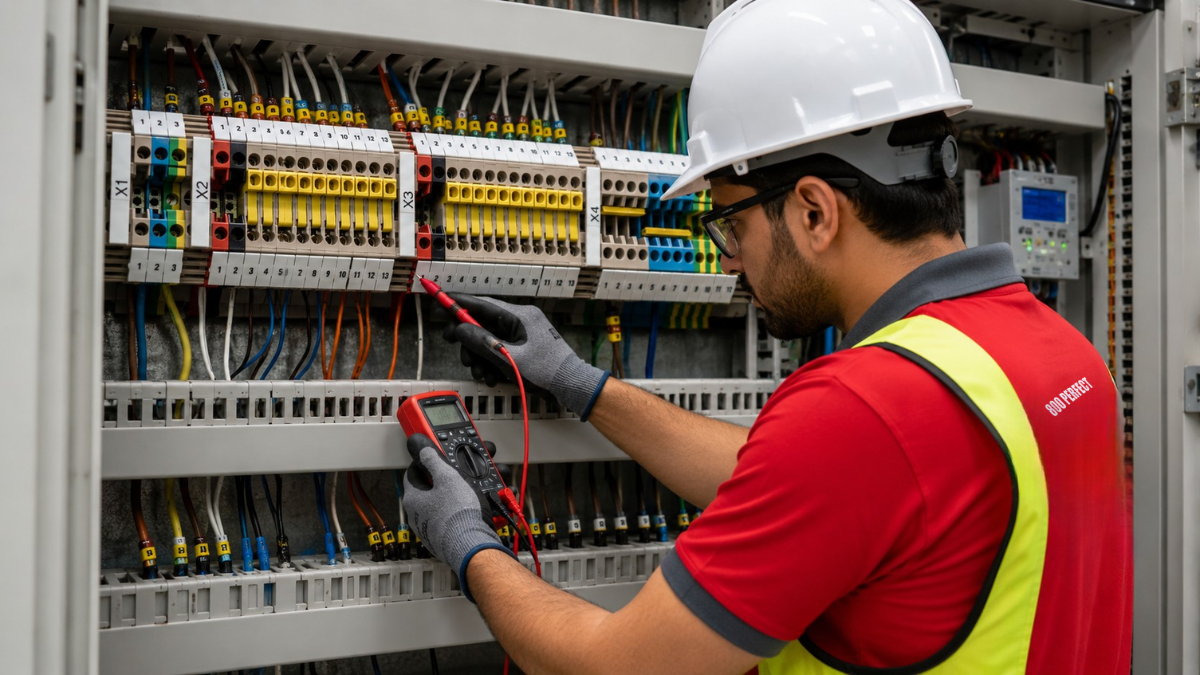
Coding a defect entry to the correct regime requires technical judgement at the inspection stage. A visual walkthrough during property snagging dubai inspections cannot make the call reliably. The Yalla Fix It snagging engineer codes each entry against four diagnostic questions. The four-question framework drives the regime assignment.
Question one: is the defect a construction or commissioning quality issue (codes to DLP) or an equipment functional failure (codes to product warranty). Question two: is the equipment in question installed under the developer's scope (DLP-eligible) or supplied separately by the buyer (warranty-only). Question three: does the defect fall within the structural protection envelope (10-year warranty) or the general construction envelope (12-month DLP). Question four: is the defect within the current warranty window for the relevant regime or already expired.
Each snag entry in a Yalla Fix It report carries the regime code (DLP, HVAC-WARR, SMART-WARR, APPLIANCE-WARR, RERA-STRUCT or OUT-OF-WARR), the relevant warranty period for the equipment, the supporting evidence (instrument reading or photo) and the recommended escalation channel. The buyer receives a register that escalates cleanly into the right workflow on day one.
What Changes at the 11th Month and the 5th Year
Two timeline events shift the snagging inspection regime mix significantly. The 11th month from handover is the last window inside DLP. The 5th anniversary from handover crosses out most product warranties on HVAC, smart home and white goods. The defect register from each snagging inspection needs to reflect both events.
The 11th-month inspection (covered in detail in a separate Yalla Fix It blog) is the moment to push every DLP-eligible defect through the developer rectification queue before the warranty window closes. After the defect liability period closes at month 12, DLP-eligible defects identified for the first time may still be considered by the developer as goodwill rectification but are no longer contractually enforceable. The contractual leverage for any snagging inspection entry drops sharply at month 12.
The 5th anniversary triggers a similar regime reset on product warranties. HVAC equipment warranties typically expire between years 2 and 5. Smart home component warranties typically expire at years 2 to 3. White goods between years 2 and 5. After the relevant warranty expiry under the property snagging dubai framework, equipment failures become buyer-funded maintenance rather than warranty-funded rectification. The defect register coding has to track each warranty expiry separately. The full timeline is detailed inside the snagging services dubai brief on the Yalla Fix It blog.
Six Questions Buyers Ask About DLP and Warranty Coding
Buyers in Dubai consistently ask the same six questions about the DLP and warranty regime split during the inspection conversation. The answers below are the framework the Yalla Fix It snagging team works to.
- Which defect categories code to DLP and which code to produce warranty?
- How does the snagging dubai inspection differentiate a commissioning quality defect from an equipment functional failure?
- What happens when a defect is coded to the wrong regime on the snag report?
- How does RERA's 10-year structural warranty interact with the developer's standard DLP?
- Can a defect entry be re-coded between regimes after the original snag report is submitted?
- What evidence is needed to enforce a warranty claim through the manufacturer's authorised service network?
The Yalla Fix It snagging team supplies written answers to all six during the booking conversation. The same regime-coding protocol applies across every snagging Dubai inspection delivered by the Yalla Fix It team. The wider framework lives inside the ultimate guide to property snagging on the Yalla Fix It blog.
Bottom Line: Code Every Entry Correctly From Day One
DLP and product warranty are two regimes with two pathways. Defect entries coded correctly at the inspection stage escalate through the right channel and get rectified at no cost to the buyer. Defect entries mis-coded get bounced between regimes and end up buyer-funded. The arithmetic is one-way. A properly coded snag report is worth more than a properly evidenced one if the evidence escalates to the wrong counterparty.
The Yalla Fix It snagging team codes every entry against the four-question diagnostic framework at the inspection stage. The snag report ships with regime codes, warranty windows, escalation channels and supporting evidence per entry. Buyers escalate cleanly into the correct workflow on day one rather than chasing rejected entries between developer customer service and manufacturer authorised service networks.
Buyers approaching handover, 11th-month warranty inspection or longer-cycle structural review can contact the Yalla Fix It team for a property-specific inspection slot and a regime-coded snag report calibrated to the property's actual warranty profile.
Frequently Asked Questions
What is the difference between DLP and product warranty in a snagging dubai inspection?
In a snagging dubai inspection the DLP (defect liability period) covers construction and commissioning quality defects under contractual obligation against the developer for 12 months from handover. Product warranty covers equipment functional failures under manufacturer responsibility for varying periods (12 to 60 months depending on equipment). They run on different timelines, escalate through different channels and reach different counterparties. Mixing them up costs the buyer money.
How does a snagging dubai inspection determine which regime an entry should code to?
A snagging dubai inspection determines regime coding through a four-question diagnostic: is the defect a construction/commissioning quality issue (DLP) or an equipment functional failure (product warranty); is the equipment installed under developer scope (DLP-eligible) or buyer-supplied (warranty-only); does the defect fall within the structural protection envelope (10-year warranty under RERA) or general construction; is the defect within the current warranty window for the relevant regime.
How long does the defect liability period run on a Dubai property?
The defect liability period on a Dubai property runs 12 months from handover signature on residential properties and typically 12 to 24 months on commercial properties. The exact length is written into the sale and purchase agreement. Snagging dubai inspections should be timed to leave at least 25 to 30 working days inside the DLP for the developer rectification cycle to complete before warranty closure.
What does the RERA 10-year structural warranty actually cover in a snagging dubai dispute?
The RERA 10-year structural warranty covers foundations, primary structural frame, waterproofing membranes and roof structure on a Dubai property from handover. It is a narrower defect category than the DLP but runs significantly longer. A snagging dubai entry that codes to structural warranty enters the developer's quality channel first and escalates through RERA's complaints framework if disputed. The protection survives well beyond the standard 12-month DLP window.
What happens if a defect entry in a snagging dubai report codes to the wrong regime?
If a defect entry in a snagging dubai report codes to the wrong regime it gets bounced between counterparties. The developer rejects equipment failures pointing to manufacturer warranty. The manufacturer rejects commissioning quality defects pointing back to the developer. The buyer ends up self-funding rectification while both sides claim the entry sits with the other. The Yalla Fix It snagging team prevents this through correct regime coding at the inspection stage.
Can a snagging dubai defect entry be re-coded between regimes after the report is submitted?
Yes. A snagging dubai defect entry can be re-coded between regimes after the original report is submitted if new evidence surfaces during the rectification cycle. The Yalla Fix It team handles re-coding through a written amendment to the original snag report with supporting evidence for the change. The amendment process is the cleanest way to move an entry from one regime to another without the entry being lost in transit.
What evidence is needed to enforce a product warranty claim through the manufacturer's service network?
Enforcing a product warranty claim through the manufacturer's authorised service network requires the original equipment serial number, the installation date documented in the developer handover pack, the warranty registration confirmation if applicable and the snag entry from the snagging dubai report with regime code, instrument reading where relevant and photographic evidence. The Yalla Fix It snag report ships with all of this attached to every warranty-coded entry.