Kitchen Exhaust Cleaning for Restaurants: Frequency, Cost, and Fire Risk
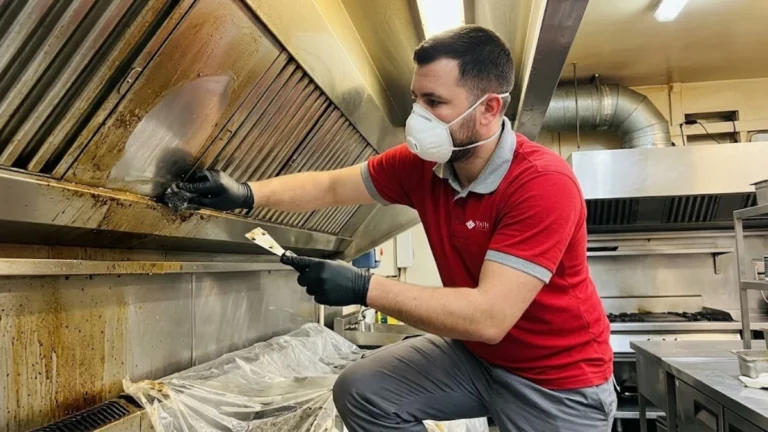
Restaurant kitchen exhaust cleaning is one of the highest-consequence maintenance categories in Dubai F&B. Getting frequency wrong creates fire risk, regulatory exposure, and insurance complications. This guide covers what Civil Defense requires, how to work out the right cleaning frequency, what proper cleaning actually includes in scope, and the cost drivers behind quotes that vary widely.
Why Kitchen Exhaust Cleaning Matters for Restaurants in Dubai
Kitchen exhaust systems accumulate grease, oil vapour, and combustion by-products every hour of operation. Under continuous restaurant use, buildup happens faster than most operators expect.
Grease accumulation in exhaust systems is the single largest fire risk in commercial kitchens. A grease fire in a hood or duct spreads through the entire exhaust system rapidly, typically bypassing standard suppression systems and reaching the roof or adjacent structures within minutes.
Dubai regulatory context adds specific requirements. Civil Defense compliance requires documentation of cleaning frequency and scope. Municipal food safety inspection outcomes are affected by grease accumulation. Some licenses specifically require cleaning documentation. Commercial insurance policies typically require compliant cleaning records for coverage validity.
The cost of a kitchen fire in Dubai, including property damage, business interruption, and licensing consequences, is significantly higher than the cost of proper cleaning frequency. Prevention through structured cleaning is fundamentally cheaper than reactive fire response.
How Often Restaurant Kitchen Exhaust Cleaning Should Happen
Cleaning frequency depends on two things: how much grease the kitchen produces per operational hour, and how many hours it operates. Cuisine and cooking method matter to the extent they influence grease production, but volume and operational intensity are the stronger drivers.
Kitchens running high-intensity operations (heavy grill work, continuous frying, wok cooking at high covers, or 18-plus operating hours daily) typically need monthly full cleaning. Mixed operations at moderate volume, hotel restaurants with varied menus, and standard casual dining typically fit quarterly full cleaning with filter service in between. Low-intensity operations (bakeries, coffee-focused venues, salad and sandwich concepts) can often manage bi-annual full cleaning with quarterly filter service.
The volume override matters. A bakery operating at hotel banquet scale can produce more grease per hour than a mid-scale grill restaurant, and the cleaning schedule should reflect actual grease output rather than the perceived category. When a provider assesses the kitchen properly before quoting, they will look at hood configuration, cooking equipment, cover volume, and operational hours together to set the schedule.
For coordinated commercial coverage including exhaust cleaning, facility management services in Dubai integrate exhaust scheduling within broader operational maintenance rather than standalone booking.
What Proper Kitchen Exhaust Cleaning Actually Covers
The scope of “kitchen exhaust cleaning” varies dramatically between providers. Understanding what proper cleaning includes prevents under-scoped service that leaves grease deposits behind.
Filter Cleaning
Baffle filters or mesh filters trap the majority of grease at the hood level. Proper filter cleaning removes filters from the hood, degreases them in an appropriate solution (often overnight soak), inspects for damage requiring replacement, and documents filter condition. Filter cleaning alone is not exhaust cleaning; it is the most basic level.
Hood Cleaning
The hood itself accumulates grease on internal surfaces. Interior hood surfaces get degreased to bare metal. Grease containment troughs are cleared. Hood exterior is wiped down. Lighting fixtures get cleaned and tested for continued function.
Plenum and Immediate Ductwork
The plenum area behind the filters and initial ductwork sections accumulate significant grease. Access panels open for direct cleaning. Grease is scraped and degreased. Ductwork is inspected for buildup extent. Photographic documentation of pre and post condition creates the compliance record.
Full Ductwork Cleaning
Where ductwork buildup requires attention, access panels or cutting may be required for full ductwork cleaning throughout the run to the roof exit. This is where the highest-risk zones sit, and it is also where under-scoping happens most often because access is inconvenient.
Fan Assembly
The exhaust fan itself accumulates grease that reduces performance and creates fire risk. Fan blades are cleaned. Motor housing is inspected. Belt condition is assessed. Discharge duct is cleaned.
Compliance Documentation
Documentation is not optional; it is the compliance deliverable that satisfies regulators. Every cleaning should produce before-and-after photographs, a written report specifying scope and findings, a cleaning certificate for Civil Defense compliance records, and filter and component condition assessment.
The Fire Risk of Delayed Cleaning
Understanding why regulators require documented cleaning helps operators prioritise scheduling.
Grease deposits in exhaust systems create fuel that ignites at temperatures reached during normal cooking. Once ignited, grease fires spread through the ductwork system rapidly, bypass standard hood suppression systems, and reach roof and adjacent structures within minutes. They create smoke damage across the operation, typically require full ductwork replacement even in successful suppression scenarios, and trigger business interruption during investigation and rebuild.
The financial impact of a serious kitchen fire in Dubai typically includes property damage running significant amounts, business interruption during closure, insurance claim complications if cleaning records are inadequate, licensing review and potentially renewal complications, and reputation damage affecting reopening performance. Every one of these consequences is preventable through proper cleaning frequency.
Cost Drivers for Restaurant Exhaust Cleaning
Restaurant exhaust cleaning cost varies based on measurable factors rather than flat pricing. Understanding the drivers helps evaluate whether quotes reflect proper scope:
- Hood size and complexity, larger and multi-section hoods take longer
- Ductwork length and complexity, longer runs and multiple bends require more access work
- Roof access requirements, external ductwork and rooftop fan access add complexity
- Access difficulty, kitchens with limited space or closed ceiling access complicate work
- Historical cleaning condition, first cleaning of a neglected system requires significantly more work than maintenance cleaning
- Documentation requirements, full compliance documentation with photography adds preparation time
- Grease production intensity, determines base cleaning frequency and total scope over the year
Providers offering flat pricing regardless of these variables typically under-scope the work.
For F&B operators evaluating cleaning scope more broadly, understanding whether an annual maintenance contract pays off for Dubai operations helps decide the right structure for exhaust cleaning within broader coverage.
Structuring Cleaning as Commercial Coverage
Rather than booking individual cleanings reactively, coordinated commercial coverage delivers better compliance and cost outcomes.
Scheduled cleaning through commercial annual maintenance contracts in Dubai using a modular plug-and-play package includes exhaust cleaning at the appropriate frequency, filter service between full cleanings, compliance documentation, and coordination with other commercial maintenance work.
The advantages of coordinated coverage compound over the year. Frequency locked into scheduling prevents forgotten cleanings. Compliance documentation gets maintained proactively rather than scrambled together before inspection. Coordination with other maintenance reduces operational disruption. Cost predictability across the year enables better budget planning. Priority scheduling during peak operational periods protects the operation when it matters most.
For operators structuring cleaning schedules across all maintenance categories, a month-by-month home maintenance schedule for Dubai properties applies the same scheduling logic to residential coverage.
Common Compliance Failures in Restaurant Kitchens
Operators unfamiliar with proper cleaning requirements often make patterns of mistakes that create compliance and safety exposure. Filter-only cleaning marketed as “exhaust cleaning” leaves plenum, ductwork, and fan uncleaned. Extended intervals to reduce cost create buildup that requires more expensive cleanings later. Undocumented cleaning means no compliance evidence for Civil Defense inspection. Same-provider decade-running relationships sometimes mean scope creep in reverse (less thorough over time as familiarity replaces rigour). No photographic documentation means no evidence of pre and post condition. Ductwork skipped due to access difficulty is the most dangerous of all because the highest-risk zone gets skipped most often.
For general commercial cleaning within which exhaust cleaning sits, the kitchen deep cleaning checklist covering 15 zones covers the systematic zone approach professionals use for full kitchen coverage.
How Yalla Fix It Handles Restaurant Exhaust Cleaning
Effective restaurant exhaust cleaning requires methodology aligned with regulatory requirements and fire risk reality.
Assessment-Based Scheduling
Frequency is calibrated to the actual kitchen after walkthrough covering hood configuration, cooking equipment, cover volume, and operational hours. One-size scheduling gets replaced with a schedule matched to how the specific kitchen produces grease.
Full Scope Coverage
Every scheduled cleaning covers filters, hood interior, plenum, ductwork, and fan assembly. Filter-only or hood-only scheduling is not offered as “cleaning” because it is not cleaning; it is filter service.
Documentation Standard
Every cleaning produces before-and-after photographs, written scope report, cleaning certificate for compliance records, and recommendations for next-cleaning timing. Documentation is compliance-ready without additional operator work.
Off-Peak Scheduling
Cleaning is scheduled during operational off-peak periods (late night, early morning, weekly closure days) to minimise operational disruption. Access coordination happens ahead of the cleaning visit rather than on arrival.
Coverage Integration
For operators wanting integrated coverage across cleaning and broader maintenance, coordinated scheduling reduces total contractor visits and simplifies compliance documentation. Kitchen exhaust cleaning services in Dubai integrate with facility management coverage where broader scope is required.
For F&B operators who need broader operational support alongside cleaning, professional handyman services in Dubai handle the related maintenance work that supports uninterrupted operations.
Choosing an Exhaust Cleaning Provider
Verify the provider is licensed in Dubai and insured for commercial work including public liability specific to fire risk. Confirm technicians hold relevant certifications for confined space work and grease handling. Ask about scope; providers offering “cleaning” without full scope specification typically under-deliver. Request sample compliance documentation to evaluate what will actually be delivered. Check response for cleaning-related failures such as blocked filters causing operational issues.
Providers offering scheduled coverage rather than only reactive service typically deliver better compliance and cost outcomes. Reactive providers benefit from urgent callouts; scheduled providers benefit from clean records.
Why Yalla Fix It for Restaurant Kitchen Exhaust Cleaning
Yalla Fix It has delivered commercial kitchen exhaust cleaning across Dubai F&B operations with assessment-based scheduling and Civil Defense-compliant documentation. The team covers 10,000+ maintenance and repair jobs completed, and the technician bench is 75+ certified technicians with DEWA certification for electrical work. Emergency support runs 24/7.
Coverage spans commercial districts across Downtown, Business Bay, DIFC, Dubai Marina, JBR, and other F&B-dense areas.
Book Restaurant Exhaust Cleaning With Yalla Fix It
For F&B operators wanting compliance-ready cleaning matched to actual kitchen conditions, contact Yalla Fix It for a restaurant kitchen exhaust cleaning quote in Dubai and the schedule will be structured around operational needs.
Frequently Asked Questions
How often should restaurant kitchen exhaust be cleaned in Dubai?
Frequency depends on grease production intensity and operating volume. High-intensity kitchens (heavy grill, continuous frying, high covers, extended operating hours) typically need monthly full cleaning. Moderate operations typically fit quarterly. Low-intensity operations (bakeries, cafés, sandwich shops) can often manage bi-annually. Filter cleaning may be needed more frequently between full cleanings.
Does Dubai Civil Defense require kitchen exhaust cleaning documentation?
Yes. Fire safety compliance requires documented cleaning records. Cleaning certificates specifying scope, findings, and next-cleaning recommendation are the standard compliance deliverable.
Is filter cleaning the same as exhaust cleaning?
No. Filter cleaning is one component. Full exhaust cleaning covers filters, hood interior, plenum, ductwork, and fan assembly. Filter-only cleaning marketed as “exhaust cleaning” leaves the highest-risk zones uncleaned.
What is the fire risk of skipped exhaust cleaning?
Grease accumulation is the leading cause of commercial kitchen fires globally. Grease fires spread through ductwork rapidly, bypass standard suppression systems, and typically require full ductwork replacement even in successful suppression.
Can exhaust cleaning be done during operational hours?
Cleaning is typically scheduled during operational off-peak periods (late night, early morning, weekly closure days) to minimise disruption. Full cleaning of large systems may require several hours of downtime.
What documentation should the cleaning provider deliver?
Before-and-after photographs, written scope report, cleaning certificate for Civil Defense compliance records, filter and component condition assessment, and recommendations for next-cleaning timing.
Does Yalla Fix It handle restaurant exhaust cleaning across Dubai?
Yes. Commercial kitchen exhaust cleaning coverage spans F&B operations across Dubai with assessment-based scheduling, full-scope cleaning, and Civil Defense-compliant documentation.
Related Services