Drain Line Jetting Schedule in Dubai: When and How Often to Clean
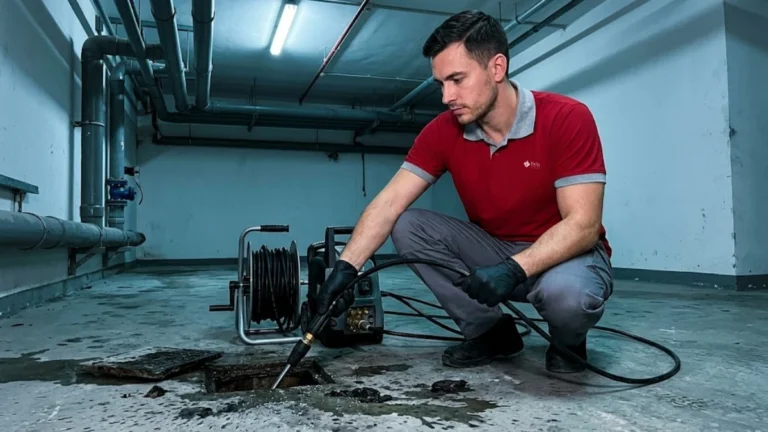
Quick Answer: Drain lines in Dubai should be professionally jetted every 6 to 12 months for standard residential properties, every 1 to 3 months for restaurants and hospitality operations, and every 3 to 6 months for commercial and industrial facilities. Frequency depends on property usage, waste type, pipe condition, and specific compliance requirements.
Drain line jetting is a preventive maintenance service that uses high-pressure water to remove grease, sediment, tree roots, and buildup from plumbing systems. Unlike snaking, which punches holes through blockages but leaves pipe walls coated with buildup, jetting scours pipe walls completely, delivering longer-lasting results and preventing quick recurrence. In Dubai’s climate, drain contamination happens faster than in temperate regions due to mineral-rich water accelerating scale accumulation, high humidity supporting bacterial growth, and continuous year-round building occupancy generating steady wastewater loads. Choose a qualified provider that can document the cleaning scope and provide records required by your property’s fire-safety procedures and applicable local requirements. We at Yalla Fix It coordinate drain line jetting across Dubai residential and commercial properties as part of structured plumbing maintenance coverage.
Recommended Drain Line Jetting Frequency by Property Type
Different property types produce different wastewater volumes and drainage contamination profiles, driving different jetting cadences. Understanding the appropriate frequency for your specific building helps property managers structure the right preventive coverage without under-servicing (creating blockages and emergency callouts) or over-servicing (unnecessary cost).
High-Volume Commercial Properties
Buildings with continuous high-volume operations demand tightened cleaning cycles because drainage systems accumulate contamination faster:
- Restaurants and dining establishments: Every 1 to 3 months due to grease and food waste accumulation
- Hotels and hospitality operations: Every 3 to 6 months, with quarterly cycles for high-volume properties
- Hospitals and healthcare facilities: Every 2 to 4 months due to hygiene and regulatory standards
- Industrial facilities: Every 3 to 6 months due to chemical waste and debris
- Shopping centres with food courts: Every 3 to 6 months, with tightened cycles for high-traffic food operations
Related commercial ventilation cleaning often coordinates with drain jetting during broader building maintenance visits to reduce operational disruption for commercial tenants.
Residential and Standard Commercial Properties
Standard occupancy properties can follow moderate cleaning cycles calibrated to occupancy density:
- Standard residential properties: Every 6 to 12 months for standard occupancy, annually for low-use properties
- High-rise residential towers: Every 6 months due to higher occupancy and drainage volume
- Commercial office buildings: Every 6 months for standard business operations
- Retail properties without food service: Every 6 to 12 months for standard retail operations
- Educational institutions: Every 6 months coordinated with academic calendars
Emergency and Reactive Jetting Scenarios
Beyond scheduled preventive service, several scenarios trigger immediate jetting requirements outside normal cadence. Property managers should assess drainage system conditions against these emergency indicators regardless of scheduled cleaning cycles.
Why Jetting Frequency Matters for Dubai Properties
Drain line jetting frequency is not simply a maintenance preference. It affects plumbing system performance, business operations, hygiene standards, emergency callout costs, and property value protection. Understanding the specific reasons behind cleaning cadences helps property managers see why deferred jetting creates measurable building-level risk.
Grease and Sediment Accumulation
Cooking oils and fats coat pipe walls in kitchen-connected drainage systems, gradually reducing flow capacity and eventually causing blockages. Even non-kitchen drainage systems accumulate soap scum, hair, and organic matter that binds with mineral deposits over time. In Dubai’s mineral-rich water environment, scale accumulation happens faster than in temperate regions, adding to grease and organic buildup on drain walls.
Emergency Callout Cost Escalation
Reactive plumbing callouts price significantly higher than scheduled preventive jetting, and our same-day emergency response is available for buildings facing active drainage failures. Emergency response typically costs 3-5x more than the equivalent scheduled service, plus disruption costs to business operations. Buildings without preventive jetting schedules routinely face emergency callouts that could have been prevented through structured coverage.
Business Operational Continuity
Drain failures in commercial properties cause operational downtime and tenant complaints. Restaurants forced to close due to drainage failures lose service revenue while incurring emergency repair costs. Hotels face guest complaints and potential compensation liability. Retail operations may face temporary closure during peak business hours.
Health, Hygiene, and Compliance
Blocked or slow drains create pest attraction and hygiene issues that affect building compliance status. Health inspectors flag drainage issues during commercial food operation reviews. Landlord agreements typically include plumbing maintenance requirements. Insurance policies often require documented preventive maintenance including drainage system care.
System Lifespan and Property Value
Regular jetting extends drain line lifespan and prevents premature pipe replacement. Buildings with documented preventive maintenance histories retain higher property values than buildings with reactive-only maintenance approaches. System replacement costs significantly exceed cumulative preventive service costs when problems compound over years.
Signs Your Drain Lines Need Jetting Sooner
Regardless of scheduled jetting cadence, several signs indicate immediate service is needed. Spotting these early prevents blockages, backups, and expensive emergency callouts.
Flow and Drainage Warning Signs
Building occupants and staff typically notice drainage problems before property managers become aware through inspection:
- Slow drainage across multiple fixtures: Water taking longer to drain from sinks, showers, or floor drains indicates system-wide buildup
- Gurgling sounds from drains or toilets: Bubbling noises signal air pockets caused by partial blockages restricting flow
- Recurring clogs after basic clearing: Blockages returning shortly after snaking indicate deeper buildup that snaking cannot address
- Water backup during heavy use: Backups when multiple fixtures operate simultaneously indicate main line restriction
- Visible sediment or discoloration: Debris appearing in drainage indicates advanced buildup releasing into flow
Sensory and Odour Warning Signs
Odour and sensory signs often precede visible flow problems and require immediate professional response:
- Foul odours from drain openings: Trapped waste and grease producing smells indicate significant accumulation requiring immediate cleaning
- Persistent musty smells near drainage points: Bacterial growth in contaminated drains produces distinctive odours
- Sewage smells indoors: Any sewage odour indoors indicates significant drainage failure requiring immediate attention, often alongside food-grade water tank hygiene issues affecting water quality
- Pest activity near drains: Cockroaches, flies, or fruit flies near drains signal contamination attracting them
Factors That Determine Your Optimal Jetting Schedule
Frequency recommendations vary because multiple factors affect actual drain contamination rates. Understanding these factors helps property managers set the right cadence for their specific property rather than defaulting to generic recommendations. For multi-property portfolios, our integrated facility management coverage coordinates jetting schedules across all buildings under single-provider accountability.
Property Usage and Occupancy
Occupancy density is the primary driver of drain contamination:
- High-occupancy properties: Generate more wastewater and faster contamination accumulation
- Mixed-use buildings: Residential above commercial creates layered contamination patterns
- Continuous occupancy: 24-hour operations produce steady contamination without cleaning-cycle reset periods
- Peak-season variation: Hotels and seasonal properties may need cadence adjustments matching occupancy patterns
Waste Type and Composition
Waste composition affects contamination rates significantly:
- Kitchen-heavy operations: Grease accumulation from cooking oils requires most frequent jetting
- Medical waste (healthcare facilities): Specialised handling regardless of visible contamination
- Industrial chemical waste: Corrosive materials requiring specialised chemistry
- Standard household waste: Moderate contamination from mixed residential drainage
Pipe and System Characteristics
Physical system characteristics affect maintenance requirements:
- Pipe age and material: Older pipes with rougher interiors accumulate deposits faster
- Pipe diameter and length: Longer runs and smaller diameters restrict flow faster with accumulation
- Slope and drainage design: Poor slopes create pooling points where contamination accumulates
- Number of fixtures per line: Higher fixture counts increase contamination entry rates
Dubai-Specific Factors
Dubai’s climate and water conditions accelerate drain contamination beyond temperate-climate defaults:
- Water hardness and mineral content: Mineral-rich water accelerates scale buildup in drain systems
- Climate and humidity: Dubai’s climate accelerates bacterial growth in contaminated drains
- Historical blockage patterns: Properties with recurring blockages typically need tightened cleaning cycles
What Happens During Professional Drain Line Jetting
Understanding what professional jetting involves helps property managers evaluate provider quotes and recognise when service reflects complete scope versus reduced-scope work. Alongside drain jetting, our commercial deep cleaning support covers building areas that benefit from coordinated hygiene attention.
Pre-Jetting Assessment
Professional service begins with CCTV camera inspection to identify blockage location, severity, and pipe condition before jetting. This assessment prevents equipment damage from applying inappropriate pressure to compromised pipes and identifies areas requiring specific attention beyond standard jetting scope.
Jetting Sequence
Professional jetting follows a structured process:
- CCTV inspection and pressure calibration: Camera assessment plus equipment configuration for pipe material and condition
- Nozzle selection for blockage type: Different nozzle configurations for grease, sediment, roots, or general buildup
- High-pressure water application: Water pressure at up to 4,000 PSI to scour pipe walls and clear obstructions
- Multi-directional cleaning: Water sprays forward and backward to ensure complete pipe wall cleaning
- Post-jetting flush: System flush to remove all loosened debris through drainage
- CCTV verification: Follow-up camera inspection confirms complete clearance
- Documentation delivery: Service report with before-and-after CCTV footage and maintenance recommendations
Chemistry and Equipment
Professional jetting uses commercial-grade equipment and chemistry:
- High-pressure equipment: Delivers cleaning force impossible with standard plumbing tools
- Specialised nozzles: Different configurations for different blockage types
- CCTV inspection cameras: Enable diagnosis and verification without invasive access
- Water treatment: Chemistry additives address specific contamination types
- Vacuum extraction: Captures loosened debris preventing downstream issues
Property Types We Serve for Drain Jetting
Our drain jetting coverage extends across the full range of Dubai commercial and residential properties, each with distinct operational patterns requiring calibrated maintenance approaches.
Residential and Hospitality
Coverage spans high-rise residential towers with complex drainage systems, standard residential buildings with typical household drainage, serviced apartments requiring hotel-standard maintenance, and hotels combining guest floors with commercial food operations. Educational institutions typically manage residential and dining operations through structured maintenance packages for commercial facilities that align jetting with academic schedules, while campus staff residential facilities may be served through separate preventive home maintenance plans.
Commercial and Industrial
Healthcare buildings including hospitals and clinics require jetting coordinated with regulatory hygiene standards. Commercial office buildings, retail complexes, and shopping centres complete residential and commercial coverage. Industrial facilities including manufacturing plants and warehouses face specific chemical waste challenges requiring specialised jetting approaches.
Choosing a Qualified Drain Jetting Provider
Provider selection matters significantly for drain jetting because incomplete cleaning creates continuing drainage issues and pipe damage risk from incorrect pressure application. Choose a qualified provider that can document the cleaning scope and provide records required by your property’s fire-safety procedures and applicable local requirements.
Equipment and Technical Capability
Drain jetting requires professional-grade equipment and CCTV inspection capability that general plumbing providers typically lack. Verify providers hold appropriate high-pressure equipment, camera inspection tools, and technical training for pressure calibration. Providers lacking this capability cannot deliver complete jetting regardless of marketing claims. Similar rigour applies to related commercial specialty cleaning: providers offering garbage chute cleaning coverage or specialised industrial cleaning should demonstrate equivalent category expertise.
Insurance and Licensing
Legitimate providers hold three specific credentials:
- Public liability insurance covering commercial plumbing work at appropriate coverage levels
- Workers compensation for technicians working with high-pressure equipment
- Trade licenses covering commercial plumbing and maintenance work
Ask for current documentation rather than accepting general statements.
Scope and Documentation Samples
Qualified providers offer written scope specifications listing CCTV assessment, pressure calibration approach, and post-service verification. Request sample documentation packages including before-and-after CCTV footage from previous work to verify what you will actually receive after service.
How Yalla Fix It Approaches Drain Line Jetting
We coordinate drain line jetting across Dubai residential and commercial properties through structured plumbing maintenance coverage combining operational depth with specialised category expertise. Our 75+ DEWA-certified technicians handle jetting as a scheduled preventive service, providing the operational discipline that commercial and residential properties require. Coverage extends across all Dubai property types with jetting frequencies calibrated to specific usage patterns, delivered by DEWA-certified electrical and mechanical specialists qualified for the complete scope of drainage system work.
Book Drain Line Jetting With Yalla Fix It
Yalla Fix It coordinates professional drain line jetting across Dubai commercial and residential properties, backed by 10,000+ maintenance and repair jobs completed, 75+ DEWA-certified technicians, and 24/7 emergency support. Our service coverage includes CCTV inspection, high-pressure jetting, multi-directional cleaning, post-service verification, and delivery of documented records after every visit. Contact us today to discuss drain line jetting for your Dubai property.
Frequently Asked Questions
How often should drain lines be jetted in Dubai?
Standard residential properties typically need jetting every 6 to 12 months. Restaurants and hospitality operations need cleaning every 1 to 3 months. Commercial and industrial facilities typically follow 3 to 6 month cycles. Actual frequency depends on property usage, waste type, and pipe condition.
How often should restaurant drain lines be jetted?
Restaurants typically require jetting every 1 to 3 months due to grease and food waste accumulation. High-volume operations may need monthly service. Frying-heavy cuisines warrant tightened cycles regardless of volume.
What are signs my drain line needs jetting immediately?
Slow drainage across multiple fixtures, gurgling sounds from drains or toilets, recurring clogs after basic clearing, foul odours from drain openings, water backup during heavy use, and visible sediment in drainage flow.
What is the difference between drain jetting and snaking?
Snaking punches a hole through blockages but leaves pipe walls coated with buildup. Jetting uses high-pressure water to scour pipe walls completely, removing all buildup and preventing quick recurrence. Jetting delivers longer-lasting results for stubborn or recurring blockages.
What happens during professional drain line jetting?
CCTV inspection identifies the blockage, pressure equipment is calibrated for the pipe, high-pressure water clears obstructions and scours pipe walls, post-jetting flush removes debris, CCTV verification confirms clearance, and documentation is delivered with before-and-after footage.
How do I choose a drain line jetting provider?
Choose a qualified provider that can document the cleaning scope and provide records required by your property’s fire-safety procedures and applicable local requirements. Verify insurance coverage, references from similar buildings, CCTV inspection capability, and explicit scope specifications.
Can drain line jetting be part of a maintenance contract?
Yes for continuously occupied properties. Integrated coverage through structured AMC or facility management delivers better documentation, coordinated response, and simpler vendor management than pay-per-service arrangements.