10 Defects Developers Hope You Don’t Catch And How Snagging Companies in Dubai Find Them
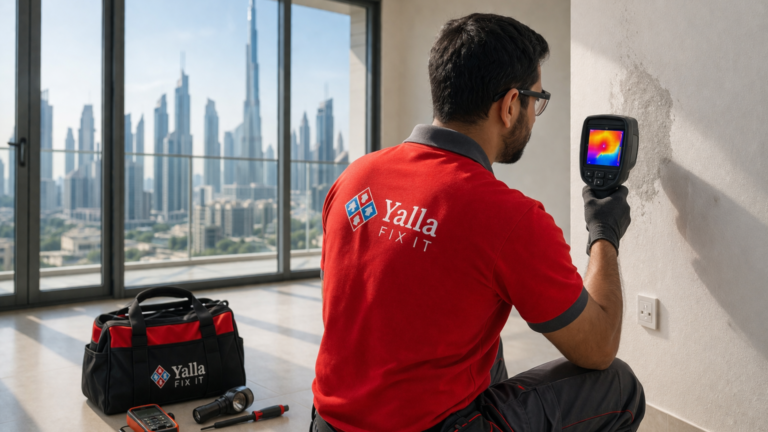
There is a category of defect that appears in professional snagging reports from Dubai’s new-build market with near-total consistency. Not the obvious ones: the cracked tile, the sticking door, the paint that missed a section of wall. Those get found in almost any walkthrough and most developers address them without significant dispute.
We’re talking about the defects that pass visual inspection. The ones that look fine today and cost AED 20000 to 50000 three years from now. The ones that professional snagging companies in Dubai find because they use thermal imaging moisture meters and structured 200-point methodologies not because they look harder than you do but because they look differently.
Every one of the 10 defects below falls within developer liability under UAE property law during the Defect Liability Period. For a full overview of what a professional pre-handover inspection covers visit our property snagging service in Dubai.
1. Concealed Moisture Behind Bathroom Tiles
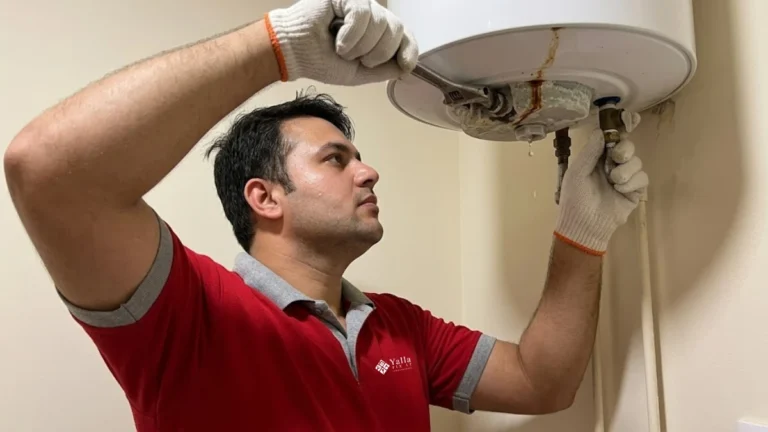
Bathroom waterproofing failures are among the most expensive defects in Dubai new-builds and completely invisible at handover. Tiles look perfect grout is flush silicone is neatly applied. But a moisture meter reading behind the tiled wall tells a different story: elevated moisture indicating that the waterproof membrane was incorrectly applied incomplete or has already failed at a joint. The cost to address this after tiles are removed and screed is broken out is AED 15000 to 40000. The developer’s cost to address it now: zero to the buyer.
2. Hollow Tiles
Tiles that have detached from the substrate look identical to fully bonded tiles. The tap test knocking lightly across the tile surface and listening for a hollow resonance reveals where adhesion has failed. Professional snagging companies conduct systematic tap tests across all tiled surfaces. Left unaddressed hollow tiles crack lift and take surrounding tiles with them in a progressive failure that rarely stops at the original defective area.
3. Thermal Bridging and Insulation Voids in External Walls
Thermal imaging reveals cold bridges and insulation voids in external walls that are entirely invisible from the finished interior surface. In Dubai’s climate where external walls are exposed to 45°C and above for months at a time insulation voids have a direct measurable impact on cooling load and in some cases create the condensation conditions that lead to mould growth inside wall cavities. This category of defect has no visual presentation at handover and is undetectable by any method short of opening the wall or using thermal imaging.
4. Incomplete or Defective Balcony Waterproofing
Balcony waterproofing is frequently rushed at the end of construction. Failures aren’t apparent until the first significant rain by then water has already penetrated the slab and is working into the ceiling of the unit below. A snagging inspection checks drainage gradient direction membrane condition at all junctions and expansion joint treatment. A surprisingly common finding: balcony drainage gradients that point toward the building wall rather than away from it a specification error that causes water ingress every time it rains.
5. AC Condensate Drainage Failures
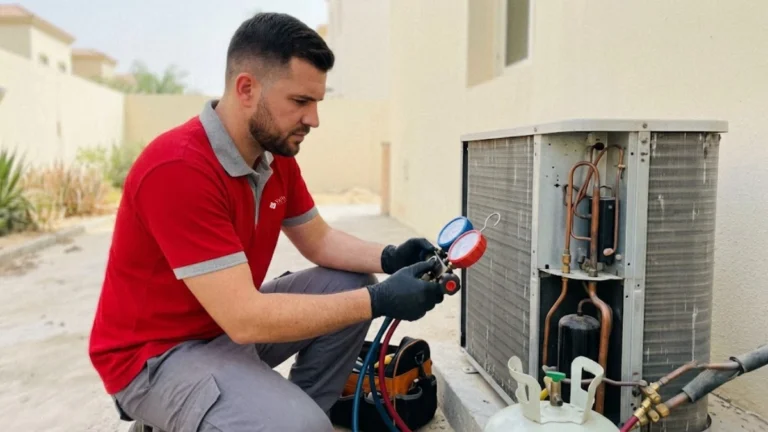
AC condensate drainage that isn’t sealed correctly or falls inadequately will cause water ingress into ceilings and walls when the system runs under heavy load which in Dubai means from May onwards. The failure point can be anywhere in the drainage run including sections running through ceiling voids. Snagging companies run AC units under load during inspection and trace drainage performance. Drainage issues that won’t manifest until peak summer are identified and documented before handover not discovered when a water stain appears on the master bedroom ceiling in July.
6. Specification Substitutions in Fittings and Fixtures
Lower-grade taps shower valves or sanitaryware than specified in the Sales and Purchase Agreement this is a routine finding in Dubai off-plan snagging reports. The fittings are installed and functioning; the casual eye sees nothing wrong. Only a cross-reference between the delivered property and the SPA specification identifies the substitution. If the delivered fitting is a downgrade from what was agreed the buyer is entitled to rectification or compensation.
7. Inadequate Electrical Earthing
Electrical systems in Dubai new-builds sometimes reach handover with inadequate earthing continuity either through installation shortcuts or because final commissioning wasn’t completed before the handover date was met. This is a safety matter, not just a quality item. A socket tester identifies earthing faults in seconds. Most buyers testing sockets during their own walkthroughs test for live and neutral only earthing continuity requires a tester with an earth function.
8. External Door and Window Seal Failures
Window and external door seals that aren’t properly compressed or continuous around the frame will fail within the first summer. The result is air infiltration that increases cooling load noise transmission and in Dubai’s environment dust infiltration through a gap that becomes progressively larger as thermal cycling expands and contracts the frame. A snagging inspection checks seal compression and continuity around every external opening.
9. Hollow Screed Beneath Flooring
Hollow screed where the screed layer has delaminated from the structural slab creates instability under flooring that manifests as cracked tiles movement and hollow sounds underfoot. It is invisible under a finished floor and silent during the period between handover and the first hot season when thermal expansion accelerates delamination. Professional snagging companies conduct screed soundness checks across all floored areas. Hollow screed identified at handover is a developer liability; the same screed discovered when your floor starts cracking 18 months later is a private repair.
10. Safety Systems Installed But Not Commissioned
Smoke detectors fitted but not connected to power. Emergency lighting installed but never tested. Fire door closers present but not functioning correctly. These items pass a visual inspection and fail a functional test. Professional snagging companies test all safety systems as standard not just checking whether they’re installed but whether they actually work. Non-commissioned safety installations are the highest-priority items on any snagging report ahead of every cosmetic or finishing defect.
Why Professional Snagging Companies Find What Buyers Miss
Six of the ten defects above require specialist equipment to identify: thermal imaging camera moisture meter socket tester. Three require systematic tap testing across every surface. One requires cross-referencing the delivered property against a specification document most buyers don’t carry to the handover appointment.
The average professional snagging inspection in Dubai identifies two to three times more defects than a buyer-conducted walkthrough. Most of the additional defects are in these invisible categories and most of them are the developer’s cost to fix. Our guide on smart tools and what they catch in property snagging Dubai explains the technology that makes the difference and our ultimate guide to property snagging in Dubai provides the complete process overview from booking through to developer rectification.
Conclusion
The 10 defects above share two characteristics: they are invisible to a walkthrough and they are the developer’s legal responsibility during the DLP window. The window is fixed. The developer’s liability within it is statutory. The only variable is whether you find the defects in time and that is exactly what professional snagging companies in Dubai are structured to do.
For property owners taking on newly completed units understanding the maintenance requirements that follow a successful snagging process is equally important. Our guide on post-construction cleaning checklist for Dubai homeowners and the overview of choosing property maintenance services in Dubai cover what comes next after the keys are in your hand.
If you’re planning your next step after snagging, you can always contact our team for expert support and guidance.
Frequently Asked Questions
How much do professional snagging companies in Dubai charge?
Fees depend on property size and type. As a benchmark: a professional inspection that identifies AED 30000–50000 in developer-liable defects typically costs a fraction of that amount. For properties above AED 1 million the inspection cost is a small proportion of the protection it provides. Contact Yalla Fix It for a quote based on your specific property.
Are all 10 of these defects automatically the developer’s responsibility?
All 10 represent categories that fall within developer liability under UAE property law either as structural defects with a 10-year liability window or non-structural defects with a minimum 1-year DLP. The specific obligation depends on severity and timing. A professionally documented snagging report is the strongest basis for making that case to the developer.
How do I choose between the snagging companies in Dubai?
Look specifically for thermal imaging included as standard (not as an add-on); a structured 200-plus point methodology; RERA-submission ready report format; and re-inspection capability after developer rectification. Ask to see a sample report. It should be detailed enough to stand up to the developer challenge.