Most Dubai property buyers have heard the term Defect Liability Period. Far fewer understand it clearly enough to use it effectively.
The DLP is not a vague promise from the developer. It is a statutory obligation defined in UAE law. It has specific categories, specific durations and specific legal mechanisms for enforcement. Used correctly it shifts the financial burden of construction defect repair, often tens of thousands of dirhams from the property buyer to the developer. Used incorrectly or not at all the same cost falls entirely on the owner.
This guide explains the DLP framework in full: what it covers, what it excludes, how to activate it and what to do if the developer does not comply. Our property snagging service in Dubai covers how a professional inspection creates the documentation needed to enforce DLP obligations.
The Legal Basis: Article 40 of Law No. 6 of 2019
The Defect Liability Period in Dubai is governed by Article 40 of Law No. 6 of 2019 Concerning Ownership of Jointly Owned Real Property in the Emirate of Dubai. The provisions establish two distinct categories of developer liability:
- Structural defects: Developer liability for 10 years from the date of the completion certificate issued by the relevant authority.
- Non-structural defects: Developer liability for a minimum of one year from the date of handover to the buyer.
These timelines run from specific trigger dates, the completion certificate date for structural liability and the handover date for non-structural liability. They are not extended by disputes by slow developer response or by delays in snag work completion. The clocks run regardless of what is happening with remediation.
What the DLP Covers and What It Doesn’t
Structural Defects (10-Year Liability)
Structural defects include failures in the primary load-bearing elements of the building: foundations, structural columns, beams, slabs and load-bearing walls. They also include failures in the building’s waterproofing systems, external facades roofing below-grade waterproofing where those failures affect the structural integrity or habitability of the property.
In practice structural defect claims in Dubai residential properties most commonly arise from settlement-related cracking foundation issues in villa properties and significant waterproofing failures that have led to long-term water ingress. These are relatively rare but extremely expensive to address which is why the 10-year liability window exists.
Non-Structural Defects (Minimum 1-Year Liability)
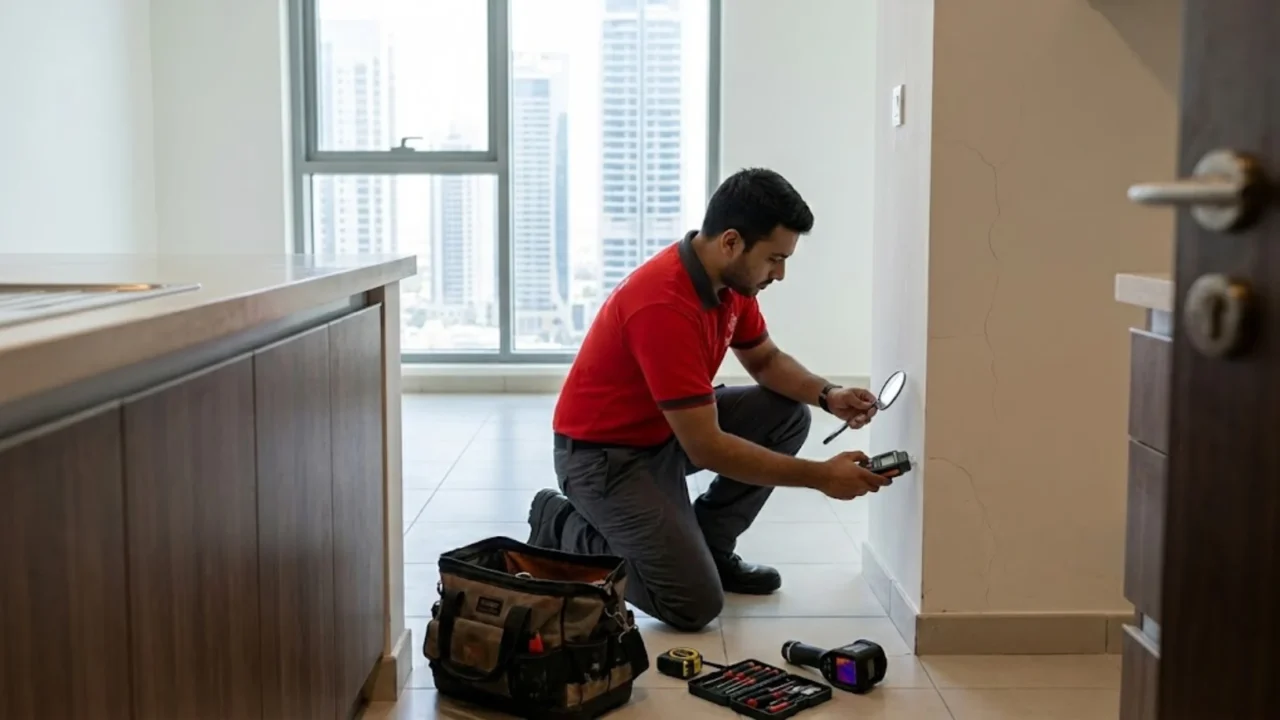
Non-structural defects are the category that affects the overwhelming majority of Dubai new-build buyers. They include: finish and quality defects (hollow tiles paint failures grouting deficiencies silicone sealant failures) MEP system defects (AC drainage failures electrical earthing issues plumbing non-conformances smoke detector commissioning failures) and specification deviations (fittings or fixtures that differ from the SPA specification).
The one-year minimum DLP for non-structural defects means that a buyer who accepts handover in April 2026 has until April 2027 to identify and document non-structural defects for developer-funded remediation. In practice the most effective approach is to identify and document as many defects as possible at or before handover which is exactly what a professional snagging inspection is designed to do.
What the DLP Does Not Cover
The DLP covers construction defects items that were built incorrectly, not completed or not built to specification. It does not cover: fair wear and tear from normal occupation; damage caused by the buyer’s own modifications or negligent maintenance; appliance failures covered under manufacturer warranties; and items that were working at handover but have failed due to inadequate maintenance by the owner.
The boundary between a construction defect and a maintenance failure can sometimes be disputed particularly for AC systems plumbing and waterproofing where the cause of failure may not be immediately obvious. A professional inspection report that documents the condition at handover provides the baseline evidence for establishing that a subsequent failure originated from a construction defect rather than a maintenance gap.
How the DLP Clock Works Timing Is Everything
For non-structural defects the DLP clock starts at handover the moment you sign the documentation accepting the property from the developer. This is the single most important timing fact in the entire snagging process. Every defect you identify and document before that signature is the developer’s pre-existing liability. Every defect you discover afterwards requires an argument about whether it existed at handover or developed subsequently.
This is the core reason that professional snagging inspections are conducted before handover not after. A pre-handover inspection creates a dated photographed independently compiled record of the property’s condition at the point of transfer, a record that is far more difficult for a developer to dispute than a post-handover complaint.
A common mistake is assuming that the DLP provides unlimited time for casual post-handover inspection. In reality the one-year window is a minimum and the earlier within that window defects are identified and submitted the more time the developer has to complete remediation and the more time the buyer has for re-inspection and confirmation. Starting the snag process on handover day rather than at month eleven is always the stronger approach.
Our guide to building inspection in Dubai explains how a professional pre-handover inspection creates the documentation that activates DLP enforcement and how the same professional tools find defects that no visual walkthrough will identify.
How to Activate Your DLP Rights
Activating DLP rights requires three things: documented defects, timely submission and written confirmation. Documented defects means a formally compiled snag report not a buyer’s verbal observation or a WhatsApp message to the site team. Timely submission means submitting the snag report in writing to the developer before the DLP window closes with a read receipt. Written confirmation means obtaining the developer’s acknowledgement and a rectification timeline in writing.
The submission does not need to wait until you have found every defect. Submitting a first round of findings from a pre-handover inspection and following up with any subsequently identified defects within the DLP window is both acceptable and common. What matters is that each submission is documented, timestamped and acknowledged.
A professional snag report structured for RERA submission is the most defensible form of DLP submission.
What to Do If the Developer Does Not Comply
If a developer acknowledges receipt of a snag report but fails to begin or complete snag work within a reasonable time RERA guidance suggests 30 to 90 days for standard items the buyer’s first step is a formal written reminder with a specific completion deadline. If the developer continues to be unresponsive the Dubai Land Department has enforcement mechanisms available to buyers under the DLP framework.
Escalation to the DLD requires: the original snag report with dates and signatures evidence of submission to the developer evidence of the developer’s failure to respond or complete and in some cases a re-inspection report confirming that items remain unrectified. This documentation set is exactly what a professional snagging engagement produces as a matter of course which is another reason that professional documentation is worth considerably more than a buyer’s own notes.
Our smart snagging tools and what they catch guide explains why thermal imaging and moisture meter evidence specifically is important in DLP disputes; these are the most common categories of developer challenge and professional instrument readings are considerably harder to dispute than visual descriptions.
Conclusion

The Defect Liability Period is Dubai’s most powerful property buyer protection mechanism. Ten years of structural liability. One year minimum for everything else. Both clocks run from dates that are not in your control but the ability to use them is entirely within yours if the right inspection happens at the right time.
The DLP does not protect buyers who skip the inspection, accept handover without documentation or discover defects after the window closes. It protects buyers who understand the framework, book a professional inspection before handover, submit a documented snag report within the window and follow through to verified completion of snag work.
Secure your rights with a professional snagging inspection before handover. Get a fully documented snag report, ensure timely submission within the DLP and confirm every issue is properly resolved through re-inspection.
Book your inspection today with Yalla Fix It and receive a detailed snag report.
Does the DLP apply to secondary market property purchases?
The DLP runs from the completion certificate (structural) and original handover (non-structural) dates not from the date of a subsequent resale. If you are buying a property that was handed over three years ago the one-year non-structural DLP has already expired. The structural 10-year liability may still be running depending on when the completion certificate was issued. This is why a building condition assessment before a secondary market purchase is still valuable; it documents defects that may require owner-funded remediation.
What if I accepted a handover without a professional snagging inspection?
If you are still within the DLP window within one year of handover for non-structural defects, commission a snagging inspection immediately. Defects identified and submitted within the window still carry developer liability. The earlier in the DLP window the inspection happens the more time is available for remediation and re-inspection. If the DLP has already expired the inspection is still useful as a condition assessment but developer-funded remediation is no longer available.
Can the developer charge me for completing snag work?
No. Snag work on DLP-covered defects must be completed at no cost to the buyer. Any developer that charges for DLP remediation is acting outside their statutory obligation. If this occurs, document the attempt in writing and escalate immediately.
What is the relationship between the DLP and RERA?
RERA (Real Estate Regulatory Agency) is one of the regulatory bodies under the Dubai Land Department that oversees developer-buyer relationships. RERA provides guidance on DLP standards and has involvement in disputes where developers fail to meet their obligations. Snag reports in RERA-submission format are the documentation standard for formal DLP enforcement.
How many defects are usually found during a snagging inspection?
The number of defects varies by property type and construction quality. In many new-build properties, dozens of issues can be identified, ranging from minor finishing defects to more significant technical problems.
Do I need to be present during the inspection?
It is not mandatory to be present during the inspection. A professional inspector will carry out a full assessment and provide a detailed report with photographic evidence for your review.
Can snag work delay the handover process?
Yes, if significant defects are identified, the developer may require time to complete the necessary snag work. It is advisable to allow completion and verification of all repairs before final handover approval.
